
Fajr Salah is the first prayer of the day and an essential part of a Muslim’s daily worship. Because it takes place at dawn, beginners may find it challenging at first, particularly when they are still learning the prayer movements, Quranic recitations, and Arabic pronunciation. Breaking the prayer into clear stages can make the process easier to understand and practice.
Learning Fajr Salah involves more than memorizing a series of movements. A beginner needs to understand the prayer structure, know what is recited at each stage, and become familiar with the transition from one position to another. Regular practice then helps turn these steps into a familiar routine.
This guide explains how Fajr Salah is structured, how to prepare for it, what is recited during the two rak‘ahs, and how beginners can approach memorization. It also discusses prayer timing, Quran recitation, common learning difficulties, and the role of teacher guidance. For students who prefer structured online support, Tarteel Online Quran Academy can provide guidance for developing Quran reading and recitation skills.
What Is Fajr Salah and When Is It Prayed?
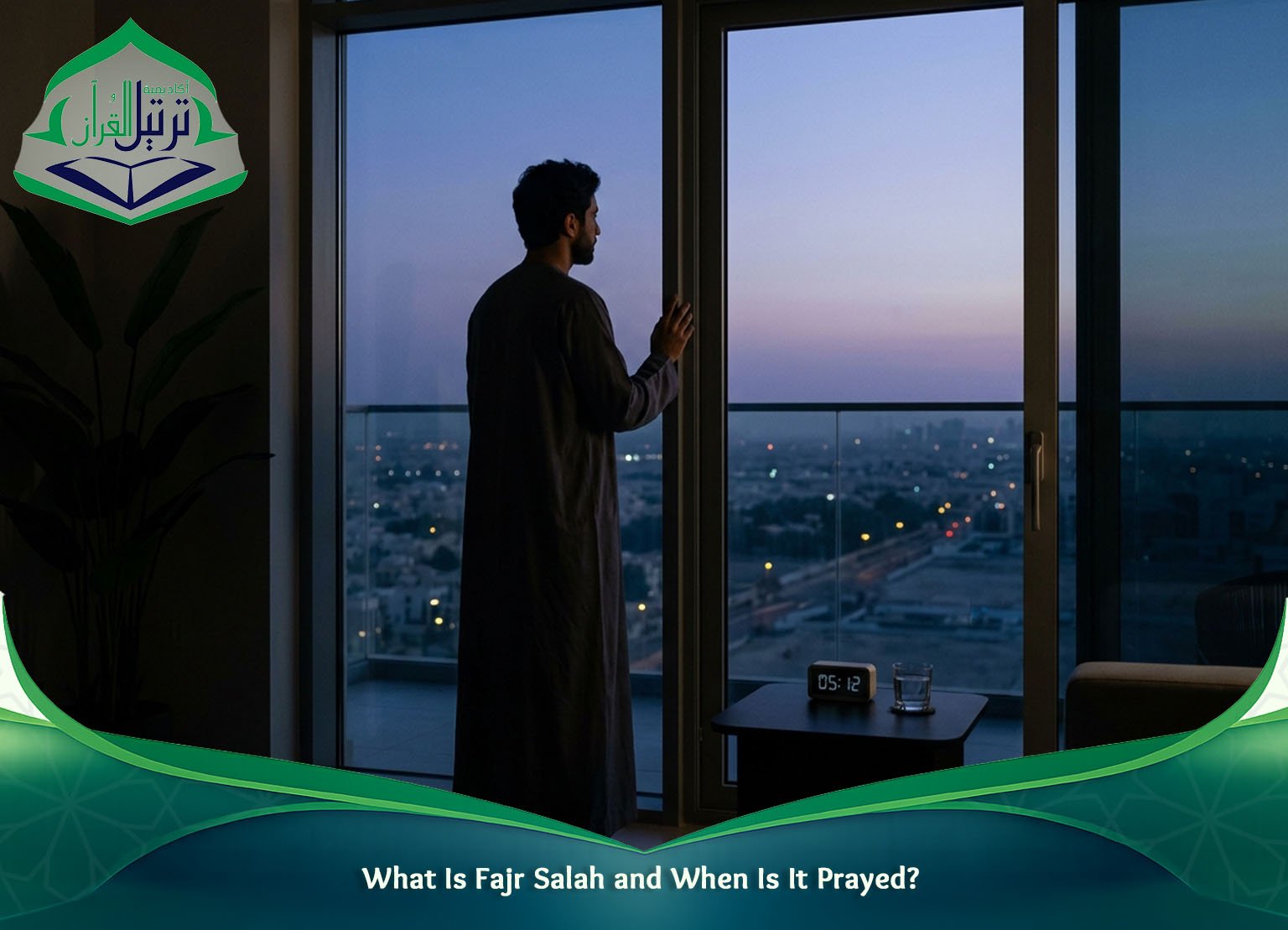
Fajr Salah is the obligatory dawn prayer and one of the five daily prayers performed by Muslims. It consists of two obligatory rak‘ahs, making it shorter in structure than several of the other daily prayers.
The prayer begins at the arrival of true dawn and ends at sunrise. Therefore, knowing the correct prayer window is an important part of preparing for Fajr. The exact times vary according to location and date, so Muslims generally refer to a reliable local prayer timetable or an established calculation method.
The two obligatory rak‘ahs are recited aloud. This allows beginners to practice both the physical movements and audible Quranic recitation.
Although the prayer is relatively short, each stage has a specific place in the sequence. Understanding that order can reduce hesitation and help a new learner practice more confidently.
For beginners, it is useful to distinguish between the broad structure of the prayer and the individual details learned through Islamic instruction. The structure provides a framework, while qualified guidance can explain specific rulings and variations where they exist.
Start Your Islamic Learning Journey Today
Join Tarteel Online Quran Academy today and begin a meaningful Islamic learning experience designed for children, adults, and beginners worldwide. Our qualified Quran teachers provide interactive lessons, flexible schedules, and personalised guidance to help students improve their Quran recitation, understand Islamic teachings, and strengthen their connection with Allah.
Through structured online classes, learners can study comfortably from home while receiving professional support at every step. Start your journey today and build a strong spiritual foundation with trusted Quran education.

Why Learn Fajr Salah Step by Step?
A step-by-step approach allows beginners to focus on one part of the prayer before combining everything. Trying to memorise movements, recitations, and supplications simultaneously can make the process feel more complicated than it needs to be.
Start by learning the overall two-rak‘ah structure. Once that framework becomes familiar, connect each movement with the appropriate recitation. This creates a mental sequence that can make later memorisation easier. There are several practical reasons to learn Fajr Salah gradually:
- It makes the prayer sequence easier to remember.
- It reduces confusion between different positions.
- It gives beginners time to practice Quran pronunciation.
- It helps identify specific areas that need more attention.
- It encourages regular practice rather than rushed memorization.
- It allows learners to correct mistakes before they become habits.
A gradual method also makes progress easier to recognize. Instead of expecting to remember everything after one lesson, the learner can work on one section, review it, and then connect it with the next.
How to Prepare for Fajr Prayer?
Before beginning Fajr Salah, a Muslim should prepare according to the general requirements of Salah. This includes being in a state of purification when required, covering the awrah appropriately, and facing the Qiblah.
The place of prayer should provide enough room to stand, bow, and prostrate safely. A clean and reasonably quiet environment may help concentration, although a special prayer room is not required.
Prayer time is another essential consideration. Since Fajr begins at dawn and ends at sunrise, checking the local prayer timetable before starting can prevent uncertainty.
A beginner can make the preparation routine easier by arranging practical details in advance. Clothing can be prepared before sleeping, the prayer area can be kept ready, and an alarm can be set with enough time to wake up and complete wudu when necessary.
These simple habits reduce distractions and allow the learner to focus on the prayer itself.
What Beginners Should Know Before Fajr Salah?
A person does not need to master every aspect of Islamic knowledge before beginning to learn Salah. However, several basic foundations are useful. A beginner should gradually become familiar with:
- The purpose and importance of Salah.
- The basic steps of wudu.
- Facing the Qiblah.
- The main prayer positions.
- Surah Al-Fatihah.
- The basic structure of a rak‘ah.
- The recitations used during prayer.
- The difference between the first and second rak‘ahs.
These foundations do not all need to be mastered on the same day. Learning them progressively can make the overall process more manageable.
At Tarteel Online Quran Academy, students can work on Quran reading and recitation through structured online instruction. This can be useful for learners who need regular practice and teacher feedback while developing the skills that support their Salah.
How Many Rak‘ahs Are in Fajr Salah?
Fajr Salah consists of two obligatory rak‘ahs. Understanding this simple structure gives beginners a useful framework before they start memorising the individual recitations.
The first rak‘ah begins with standing and Quranic recitation, followed by ruku‘ and the prostrations. The second rak‘ah follows a similar pattern and ends with the final sitting and salam.
Although the two rak‘ahs share much of the same structure, the end of the second rak‘ah has an additional concluding stage. After completing the second set of prostrations, the worshipper remains seated for the final tashahhud and the prescribed concluding recitations. A beginner can therefore remember the broad pattern as:
- Begin the prayer.
- Complete the first rak‘ah.
- Stand for the second rak‘ah.
- Complete the second rak‘ah.
- Sit for the final conclusion.
- End the prayer with salam.
This framework should not replace detailed Islamic instruction, but it provides a useful mental map for someone who is beginning to learn.
How to Pray the First Rak‘ah
The first rak‘ah begins with the intention to perform the obligatory Fajr prayer. The worshipper faces the Qiblah and enters the prayer with the opening takbir, saying “Allahu Akbar.”
While standing, the prescribed opening recitations are performed. Surah Al-Fatihah is recited, followed by another portion of the Quran.
After the standing recitation, the worshipper moves into ruku‘, the bowing position, and performs the prescribed remembrance. The person then rises from ruku‘ and returns to standing.
Next comes sujood, or prostration. The worshipper performs the prescribed remembrance while prostrating, then rises briefly into a sitting position before completing the second prostration.
For a beginner, this rak‘ah can be remembered through three broad stages:
- Standing and recitation.
- Ruku‘ and returning to standing.
- Two prostrations with the sitting between them.
Learning the sequence this way can make it easier to connect individual recitations with the physical positions.
How to Complete the Second Rak‘ah?
The second rak‘ah begins after rising from the first rak‘ah. The worshipper stands and recites Surah Al-Fatihah, followed by additional Quranic recitation.
The person then performs ruku‘ and returns to standing before completing the two prostrations with the sitting between them.
The main distinction comes after the second prostration. Instead of standing again for another rak‘ah, the worshipper remains seated for the final tashahhud and other prescribed concluding recitations.
The prayer then ends with salam.
For someone learning Fajr Salah, remembering that both rak‘ahs follow a similar movement pattern can simplify memorization. The final sitting provides the clear point that separates the completion of the second rak‘ah from the continuation of the prayer.
What Do You Recite During Fajr Salah?
Quranic recitation forms an important part of Salah. Surah Al-Fatihah is recited in each rak‘ah, followed by additional Quranic recitation.
Beginners may need time to memorize Al-Fatihah accurately. Instead of attempting to learn the entire surah in one sitting, divide it into smaller portions and review each section regularly.
Additional Quranic recitation can also be learned gradually. A beginner may find it easier to start with passages that are already familiar and then expand the amount of memorized Quran over time.
The goal during the early learning stage should be accurate recitation rather than speed. Trying to memorize a large amount of Quran immediately may create unnecessary pressure and make pronunciation harder to monitor.
Because the obligatory rak‘ahs of Fajr are recited aloud, the prayer also allows learners to practice their Quranic reading. However, audible recitation should still be approached carefully, especially when the learner is working on unfamiliar Arabic sounds.
How to Improve Quran Recitation for Fajr Prayer?
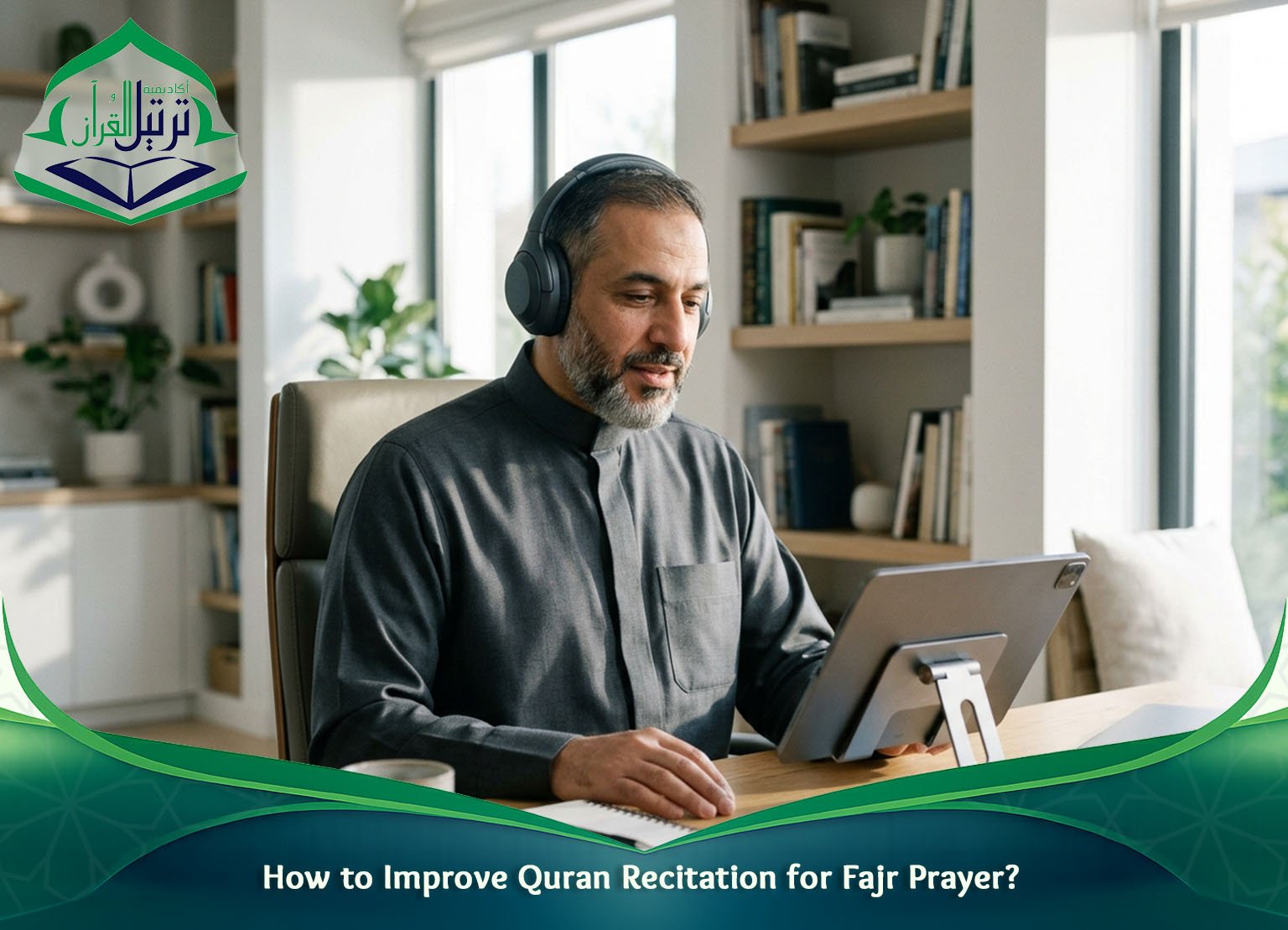
Quran recitation involves more than memorizing words. Learners need to develop accurate pronunciation and become familiar with the articulation of Arabic letters and the rules of Quranic reading.
For non-Arabic speakers, some sounds may require considerable practice. Listening to a qualified reciter can help, but listening alone does not always reveal whether the learner is producing the sounds correctly. A practical routine can include:
- Listen to a short passage carefully.
- Repeat it slowly.
- Focus on difficult letters and sounds.
- Compare the recitation with a reliable model.
- Recite without looking at the text.
- Ask a qualified teacher to correct pronunciation.
- Review the same passage regularly.
The learner should avoid rushing through memorized material. Fluency should develop alongside accuracy rather than replacing it.
Teacher feedback can be particularly valuable because some pronunciation mistakes are difficult to identify independently. A teacher can hear the recitation, explain the issue, and demonstrate how to improve it.
Tarteel Online Quran Academy can provide a structured environment for students who want guided Quran instruction. Regular teacher feedback can help learners improve their reading and recitation instead of depending entirely on self-correction.
When Does Fajr Prayer Start and End?
Fajr prayer begins at true dawn and ends when the sun rises. This makes its timing different from simply choosing any point during the early morning.
For beginners, understanding this prayer window is essential because performing the prayer requires attention to its prescribed time. Local dawn and sunrise times change throughout the year and differ between locations.
A reliable routine can make timing easier to manage. Before going to sleep, the learner can check the local Fajr and sunrise times and set an alarm that provides enough time to wake up, perform the necessary preparation, and pray.
It is also worth remembering that prayer-time calculations can differ slightly according to the method used. If different sources show different times, a learner should follow a trusted local authority or prayer timetable rather than repeatedly switching between unrelated sources.
Building the timing habit alongside learning the prayer can make the overall routine more consistent.
How to Memorize Fajr Salah as a Beginner?
Memorizing Fajr Salah becomes easier when the learner separates the physical sequence from the words being recited.
First, learn the movement pattern from the opening takbir through the final salam. Once that structure becomes familiar, connect each position with its appropriate recitation. This prevents the learner from trying to memorize movement and language as one large task. A simple memorization plan can include:
- Learn the overall two-rak‘ah structure.
- Memorize and review Al-Fatihah.
- Practice the main prayer positions.
- Add required recitations gradually.
- Repeat the complete prayer regularly.
- Review difficult sections separately.
- Ask a qualified teacher about unclear steps.
Short, focused sessions are often easier to maintain than occasional sessions that attempt to cover everything.
A learner can also use active recall. After studying a section, try to reproduce the sequence without looking at notes. Any point that is forgotten can then be reviewed specifically instead of repeating the entire lesson.
The objective is steady familiarity rather than completing the memorization as quickly as possible.
Common Difficulties When Learning Fajr Prayer
Beginners often experience similar difficulties during the early stages of learning Salah. Some remember the recitations but forget what movement comes next. Others understand the physical sequence but struggle with Arabic pronunciation.
Another challenge is trying to learn too many details simultaneously. When a learner concentrates on every movement, recitation, pronunciation rule, and religious detail at once, the prayer can seem much more complicated than it is.
A better approach is to identify the specific problem.
When pronunciation is difficult, dedicate additional practice to Quran reading. For a confusing movement sequence, practice each position separately. A learner who is unsure about a particular religious ruling should ask a qualified teacher rather than relying on random explanations from multiple websites.
These difficulties are not necessarily signs of poor progress. Learning a new prayer requires familiarity, repetition, and correction. Each practice session can make one part clearer.
Mistakes to Avoid When Learning Salah
Learning Salah requires patience, but certain habits can make the process harder.
One common mistake is memorizing sounds without understanding where they belong in the prayer. Another is practicing irregularly and expecting the sequence to remain familiar.
Beginners may also become confused when they rely on several sources that present details differently. Islamic jurisprudence contains legitimate differences in some matters, so different teachers or resources may explain certain practices according to different schools or traditions.
For this reason, consistency is useful during the learning stage. Choose a reliable source of instruction and ask questions when something remains unclear. Other habits worth avoiding include:
- Rushing through the movements.
- Ignoring Quran pronunciation.
- Watching demonstrations without practising.
- Becoming discouraged after making mistakes.
- Leaving questions unanswered.
- Trying to memorize everything in one session.
- Constantly switching between unrelated explanations.
Instead, learn one section, practice it, review it, and then connect it with the next section.
How a Teacher Can Help With Fajr Salah?
A written guide can explain the general sequence, but personal instruction provides something a text cannot: direct feedback.
A teacher can listen to Quran recitation and identify pronunciation problems. They can also explain unfamiliar terminology, answer questions about specific stages, and help the learner understand where a mistake is occurring.
This becomes particularly useful when the same problem keeps appearing. A beginner may repeat a pronunciation mistake several times without noticing it. Direct feedback can make the issue visible and provide a clear way to correct it.
Online instruction can make this type of support accessible from home. A structured program can also give learners a regular schedule instead of leaving them to decide what to study each time.
At Tarteel Online Quran Academy, students can develop Quran reading and recitation skills through guided online learning. For learners who want support while building their Quran skills as part of their wider Islamic practice, teacher feedback can make the learning process more organized.
Good instruction should not simply tell a learner what to memorize. It should also identify what needs improvement and explain how to practice it.
Fajr Prayer for New Muslims
New Muslims may find Salah challenging because several unfamiliar elements are introduced at once. Arabic recitation, prayer movements, Islamic terminology, and prayer times can all require adjustment.
The two-rak‘ah structure of Fajr provides a relatively clear framework for learning the basic sequence. However, beginners should not feel pressured to master every detail immediately.
A new Muslim can start by understanding the purpose and structure of Salah. Next, they can work on the required recitations and physical movements. As familiarity increases, Quran pronunciation and other details can be strengthened through continued practice.
Reliable instruction is particularly valuable for someone who has recently entered Islam. Rather than depending on disconnected explanations, a learner can ask a qualified teacher to clarify what is required and explain areas where legitimate differences exist.
The learning process should be approached with patience. Becoming comfortable with Salah takes time, and early mistakes are part of learning.
How to Build a Consistent Fajr Prayer Routine?
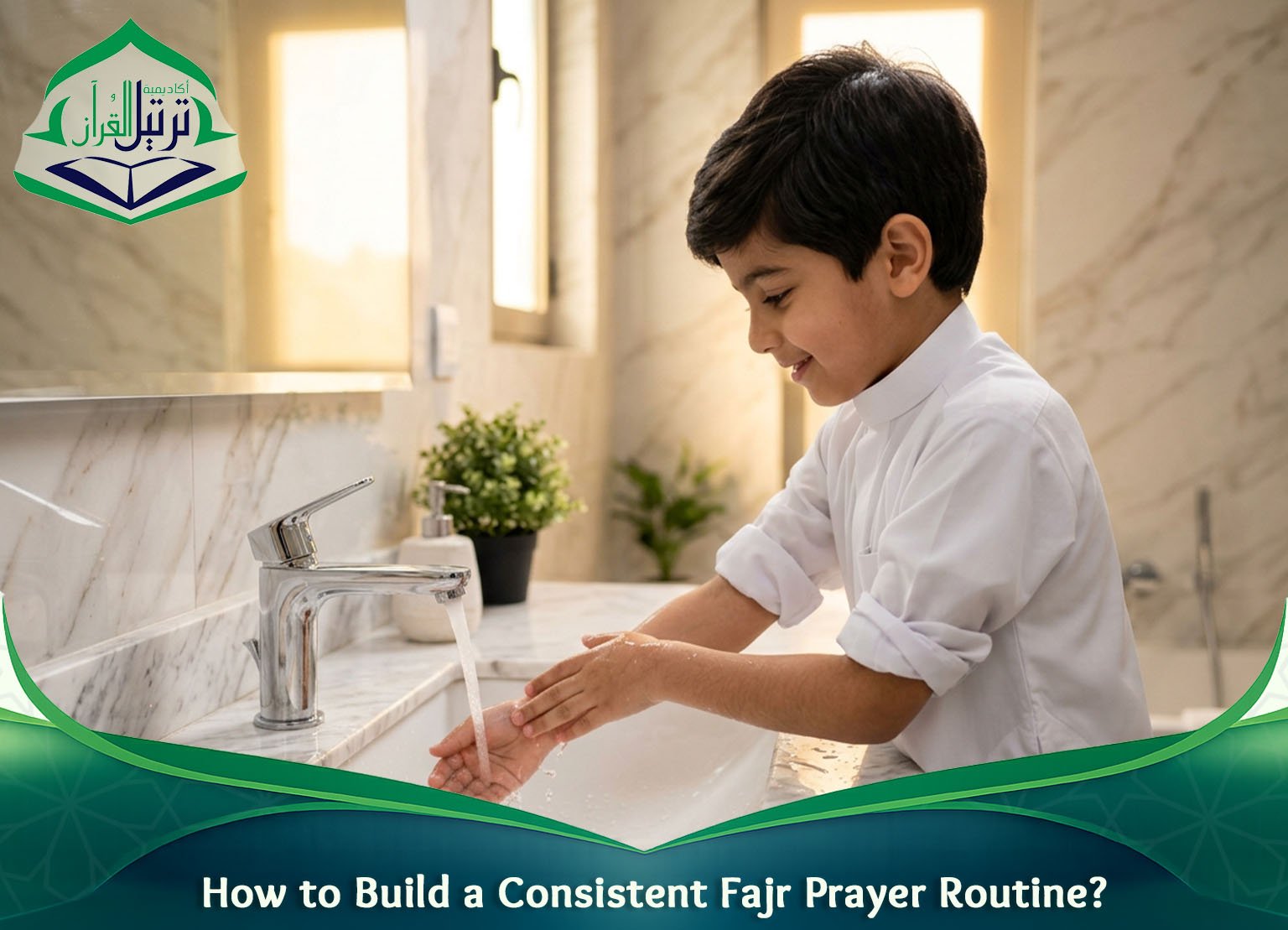
Learning the prayer is only one part of maintaining a regular Fajr routine. Sleep habits and preparation can also influence whether someone wakes up on time. For a broader understanding of Islamic rulings that may relate to prayer and worship, you can also explore what is islamic fiqh.
Going to sleep at a reasonable hour can make waking easier. Preparing clothing and the prayer area beforehand can remove unnecessary obstacles in the morning.
An alarm can also be helpful. Some people find it easier to place the alarm away from the bed so they need to stand up to turn it off. The goal is not to create a complicated routine. Instead, build a simple sequence that can be repeated consistently:
- Check the prayer time.
- Prepare before going to sleep.
- Set an appropriate alarm.
- Wake up and complete the necessary purification.
- Go directly into the prayer routine.
- Avoid unnecessary delays after waking.
Over time, these practical habits can become part of the learner’s normal morning routine.
How to Practice Fajr Salah Without Feeling Overwhelmed?
Beginners sometimes become anxious because they want to perform every part correctly from the beginning. A more productive approach is to divide the learning process into manageable goals. Students who are still learning the basic prayer sequence may benefit from reviewing a practical guide such as How to pray Salah for beginners.
Begin with the broad structure. Then work on the Quranic recitations. Afterward, review the movements and transitions. A practical progression could be:
- Goal 1: Understand the two-rak‘ah structure.
- Goal 2: Strengthen Al-Fatihah.
- Goal 3: Practice the main movements.
- Goal 4: Improve Quran pronunciation.
- Goal 5: Connect the movements and recitations.
- Goal 6: Practice the complete prayer regularly.
This approach gives the learner clear milestones. Instead of measuring progress by how quickly everything is memorized, focus on whether each part is becoming more familiar and accurate.
It is also useful to avoid comparing your learning speed with someone else’s. Previous Quran knowledge, Arabic experience, and available practice time can all influence how quickly someone becomes comfortable with the prayer.
How Quran Learning Supports Fajr Prayer?
Quran learning and Salah practice are closely connected through the recitations used during prayer. Improving Quran reading can therefore strengthen confidence when reciting during worship.
Regular Quran study can help learners develop pronunciation, fluency, memorization, and familiarity with Arabic words. These skills usually improve through consistent practice rather than one intensive session.
A learner can support both areas by reviewing Quran passages regularly and applying accurate recitation during prayer. This creates an opportunity to reinforce what has been studied.
Students who are new to Islam may also benefit from structured instruction designed around their starting level, such as Quran classes for new Muslims. Learners who have entered Islam through conversion can also explore Quran classes for converts to Islam when looking for guidance suited to their learning stage.
For students who want structured Quran education, Tarteel Online Quran Academy can provide an online learning environment where Quran reading and recitation are practiced with teacher guidance.
The connection works in both directions. Quran study can strengthen prayer recitation, while regular prayer provides repeated opportunities to use Quranic passages that have been learned.
Fajr Salah Practice Checklist for Beginners
A checklist can help beginners review the main elements without rereading the entire guide every time.
Before Prayer
- Check the local Fajr time.
- Make sure the required purification has been completed.
- Face the Qiblah.
- Prepare a suitable prayer space.
- Recall the two-rak‘ah structure.
During Prayer
- Form the intention.
- Begin with the opening takbir.
- Complete the first rak‘ah.
- Stand for the second rak‘ah.
- Complete the second rak‘ah.
- Perform the final sitting.
- End the prayer with salam.
After Practice
Identify one area that needs additional attention. It might be a particular Arabic sound, a Quranic passage, or remembering the transition between two positions.
This small review habit can make the next practice session more focused because the learner knows exactly what needs attention. Learners who want to understand different Quran reading traditions can also read about the Difference Between Hafs and Warsh Quran.
How Long Does It Take to Learn Fajr Salah?
There is no universal number of days required to learn Fajr Salah. The learning period depends on several factors, including previous Quran knowledge, Arabic pronunciation, familiarity with Salah, and the amount of regular practice.
Someone who already reads Arabic may progress differently from a person who is beginning with little or no Arabic experience. Similarly, a learner who practices consistently may become familiar with the sequence sooner than someone who studies only occasionally.
Instead of setting an unrealistic deadline, focus on steady progress. Learn one component, practice it, and then connect it to the complete prayer.
Teacher guidance may also help by identifying mistakes early. When learners know exactly what needs improvement, they can spend their practice time more effectively.
The important measure is not how quickly someone finishes the learning process. It is whether the learner is becoming more accurate, confident, and familiar with the sequence.
What to Look for in Online Fajr Prayer Lessons?
Online learning can be useful for beginners who want flexible access to Quran instruction. Students can study from home while receiving explanations, practice opportunities, and teacher feedback.
However, not every online resource provides the same type of learning. A video can demonstrate movements, while an interactive lesson allows the student to ask questions and receive individual correction. Before choosing online lessons, consider whether the program provides:
- Qualified Quran teachers.
- Clear lesson organization.
- Individual feedback.
- Beginner-friendly instruction.
- Flexible scheduling.
- Opportunities to practice Quran recitation.
- A consistent learning path.
The learner should also consider whether the teacher can address pronunciation rather than simply demonstrate the prayer. Direct correction is particularly valuable for Quran recitation because small pronunciation issues may not be obvious to beginners.
Tarteel Online Quran Academy can be considered by students who prefer structured online Quran instruction and teacher-supported practice.
What Beginners Should Remember About Fajr Salah?
The most useful principle for a beginner is that Fajr Salah follows an organized structure. It does not need to be memorized as one large block. The basic framework is:
- Prepare for prayer.
- Face the Qiblah.
- Form the intention and begin with takbir.
- Complete the first rak‘ah.
- Stand for the second rak‘ah.
- Complete the second rak‘ah.
- Perform the final sitting.
- End with salam.
After this framework becomes familiar, the learner can concentrate on improving the individual recitations and details.
Regular practice, accurate Quran reading, and reliable instruction can gradually make the prayer easier to remember and perform. When a difficulty appears, address that specific difficulty rather than assuming the entire prayer needs to be relearned.
Questions to Ask Before Choosing Fajr Prayer Lessons

If you decide to study with an online teacher, ask practical questions before beginning. First, find out whether the lessons include individual feedback. A beginner may understand the general sequence but still need help correcting Quran pronunciation or remembering a particular transition.
It is also useful to ask how lessons are structured. A clear progression allows the student to understand what will be learned first and what comes later.
Consider whether the teacher can answer questions about the prayer instead of simply demonstrating movements. This is especially important when the learner encounters different explanations from different sources.
You may also want to know whether the learning environment supports regular practice and whether the student can receive feedback on progress.
Tarteel Online Quran Academy can be considered by learners who want structured online Quran education with teacher guidance while developing stronger reading and recitation skills.
Frequently Asked Questions About Fajr Salah
The following frequently asked questions address common concerns beginners may have when learning Fajr Salah, including timing, recitation, and choosing the right learning approach.
What should I do if I wake up after Fajr prayer time ends?
If someone misses Fajr because they slept through it or forgot it, the appropriate ruling depends on the circumstances. A Muslim should seek reliable Islamic guidance about how to make up the missed prayer rather than simply ignoring it.
Can I learn Fajr Salah without knowing Arabic?
Yes. A beginner can start learning Salah without already speaking Arabic. However, the Quranic recitations used during prayer need to be learned correctly, so gradual practice with Arabic pronunciation is helpful.
What should I do if I forget part of the recitation?
Do not panic when a mistake occurs during the learning process. The appropriate response can depend on what was forgotten and at which point it happened. A qualified teacher can explain what to do in a specific situation.
Is it better to learn Fajr Salah alone or with a teacher?
Self-study can help a beginner understand the general structure, while teacher support provides direct feedback on pronunciation, sequence, and questions that may be difficult to resolve independently. Combining both approaches can be useful.
In conclusion, Fajr Salah may initially seem difficult, particularly for someone learning Salah for the first time. However, its two-rak‘ah structure provides a clear framework that beginners can approach gradually.
The most practical method is to divide the learning process into manageable parts. Understand the overall structure, practice Al-Fatihah and the required recitations, improve Quran pronunciation, and then connect the different elements through regular practice.
Early mistakes should not become a reason to stop learning. Each practice session provides an opportunity to become more familiar with the words, movements, and transitions. Reliable teacher feedback can also help identify pronunciation or sequence problems before they become established habits.
For students who want structured Quran learning alongside their development in prayer, Tarteel Online Quran Academy can provide an organized online learning environment with teacher guidance. With patience, consistent practice, and reliable instruction, learning Fajr Salah can become a clearer and more manageable part of daily worship.