
How to pray Salah for beginners is an essential guide for anyone who wants to learn the correct steps of Islamic prayer with confidence and understanding. Salah is one of the most important acts of worship in Islam, and learning how to perform it correctly helps Muslims build a stronger connection with Allah. For beginners, understanding the prayer movements, recitations, and conditions of Salah may seem challenging at first, but with proper guidance and regular practice, the process becomes easier.
At Tarteel Online Quran Academy, beginners, children, and new Muslims can learn Salah through structured online lessons with qualified Quran teachers. The academy provides step-by-step guidance to help students understand every part of the prayer, improve their Quran recitation, and develop confidence in performing their daily prayers correctly from the comfort of their homes.
This complete guide explains how to pray Salah for beginners by covering each prayer step, from making the intention and performing Takbir to Ruku, Sujud, Tashahhud, and completing the prayer with Tasleem.
How to Pray Salah for Beginners: Understanding the Structure of Prayer?
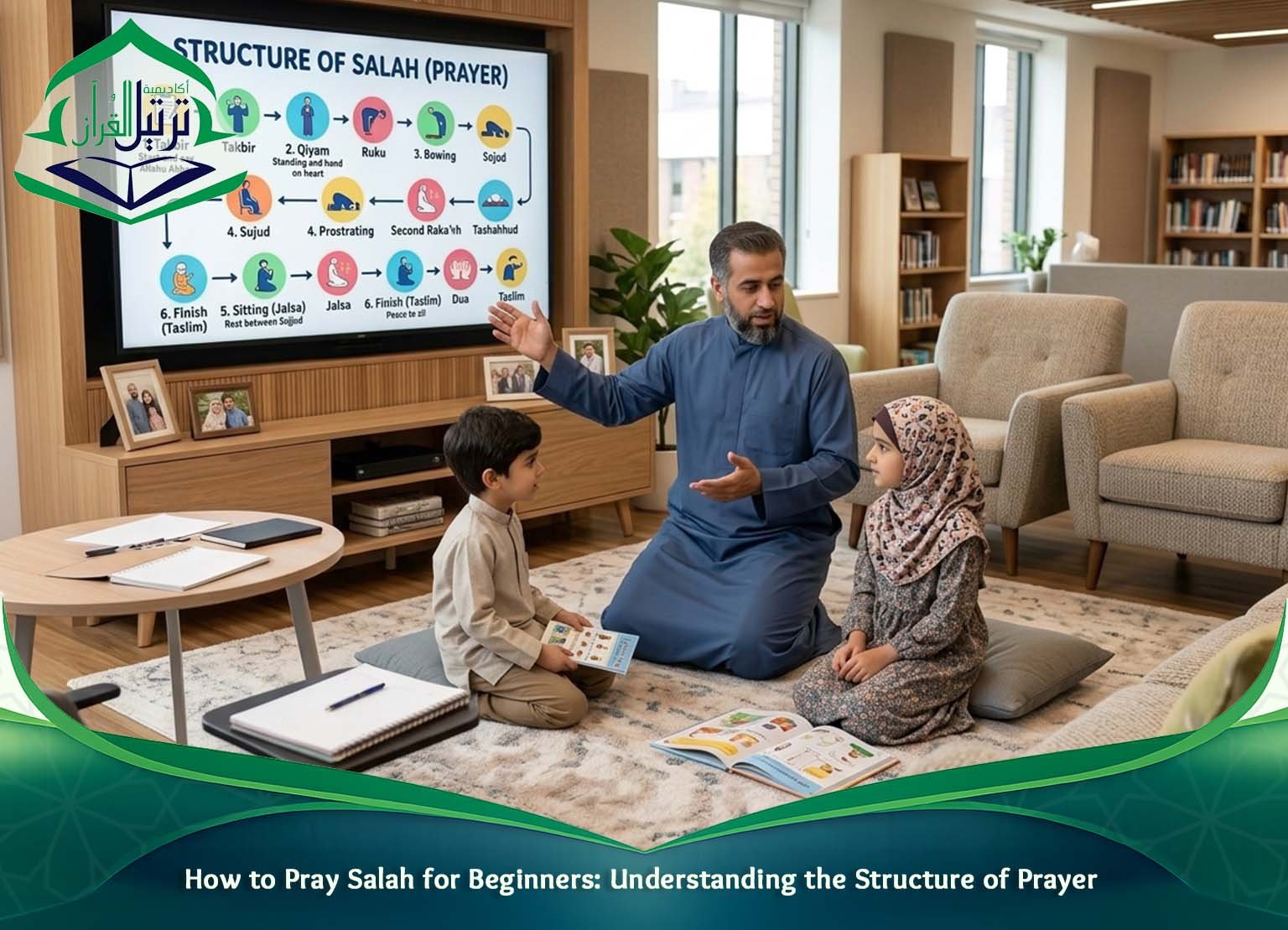
After completing Wudu correctly, you are ready to start your prayer. Learning how to pray Salah for beginners becomes easier when you understand the basic structure of Salah and practice each movement step by step. Although the five daily prayers have the same general sequence, the number of Rak’ahs (units of prayer) differs depending on the specific prayer time.
Each Rak’ah consists of several essential parts that every Muslim should learn:
- Qiyam (Standing): Standing while reciting Quran during prayer.
- Takbirat Al-Ihram: The opening Takbir that begins Salah by saying, Allahu Akbar.
- Recitation: Reading Surah Al-Fatihah along with additional Quran verses when applicable.
- Ruku (Bowing): Bowing with humility while glorifying Allah.
- Standing After Ruku: Returning to the standing position with praise of Allah.
- Sujud (Prostration): Placing the forehead on the ground as an act of complete submission to Allah.
- Sitting Between Two Sujud: Sitting briefly while making supplication.
- Tashahhud: The sitting recitation performed at specific points before completing the prayer.
Once beginners understand the steps of one complete Rak’ah, performing the remaining Rak’ahs becomes much easier. This approach helps new Muslims and children learn how to pray Salah for beginners with confidence, without feeling overwhelmed by memorizing many steps at once.
Start Your Islamic Learning Journey Today
Join Tarteel Online Quran Academy today and begin a meaningful Islamic learning experience designed for children, adults, and beginners worldwide. Our qualified Quran teachers provide interactive lessons, flexible schedules, and personalized guidance to help students improve their Quran recitation, understand Islamic teachings, and strengthen their connection with Allah.
Through structured online classes, learners can study comfortably from home while receiving professional support at every step. Start your journey today and build a strong spiritual foundation with trusted Quran education.

How to Pray Salah for Beginners: Make Your Intention (Niyyah)
The first step in learning how to pray Salah for beginners is understanding the importance of Niyyah (intention). Before starting any prayer, a Muslim should have a sincere intention in the heart to perform Salah for the sake of Allah. The intention does not need to be spoken aloud; it is enough to know which prayer you are preparing to perform, whether it is Fajr, Dhuhr, Asr, Maghrib, or Isha.
Having the correct intention helps the worshipper begin Salah with awareness, sincerity, and a clear focus on standing before Allah.
Starting With Takbir Al-Ihram
After making the intention, the prayer begins by raising both hands and saying:
Allahu Akbar
This phrase is known as Takbir Al-Ihram, and it marks the beginning of Salah. From this moment, the worshipper enters a state of prayer and should focus completely on remembering Allah.
Saying Allahu Akbar reminds Muslims that Allah is greater than all worldly matters, distractions, and daily concerns.
Standing Position and Hand Placement
After the opening Takbir, stand calmly while placing the right hand over the left hand. This standing position reflects humility, respect, and readiness to communicate with Allah.
A beginner learning how to pray Salah should focus on maintaining a relaxed posture, avoiding unnecessary movement, and standing with sincerity and concentration.
Developing Khushu and Concentration
One of the most important parts of learning how to pray Salah for beginners is developing Khushu, which means humility, attentiveness, and deep concentration during worship.
Keep your eyes focused toward the place of Sujud and avoid looking around. Reducing distractions helps increase awareness and strengthens the spiritual connection between the worshipper and Allah.
Many Muslims also recite Dua Al-Istiftah (the opening supplication) before beginning Quran recitation.
Reciting Surah Al-Fatihah Correctly
Surah Al-Fatihah is an essential part of every Rak’ah of Salah. After seeking protection from Shaytan and saying Bismillah, the worshipper recites Surah Al-Fatihah completely.
A beginner should give special attention to learning Al-Fatihah correctly because it is repeated in every prayer unit.
After completing Al-Fatihah, it is recommended in many prayers to recite another Surah or some verses from the Quran, especially during the first two Rak’ahs.
A Beginner’s Prayer Guide
After Quran recitation, move into the bowing position while saying:
Allahu Akbar
During Ruku, keep your back straight, place your hands on your knees, and maintain a calm and balanced posture.
Then say:
Subhana Rabbiyal Adheem
Meaning: “Glory be to my Lord, the Most Great.”
Learning the correct Ruku position is an important part of understanding how to pray Salah properly because every movement should be performed with peace and respect.
Steps of Salah for Beginners: Rising After Ruku
After completing Ruku, return to the standing position and say:
Sami’ Allahu liman hamidah
Then say:
Rabbana wa lakal hamd
Meaning: “Our Lord, all praise belongs to You.”
Remain still for a moment before moving to the next position. Avoid rushing between the movements of Salah, as calmness and balance are important parts of proper prayer.
How Do Beginners Perform Sujud During Salah Correctly?
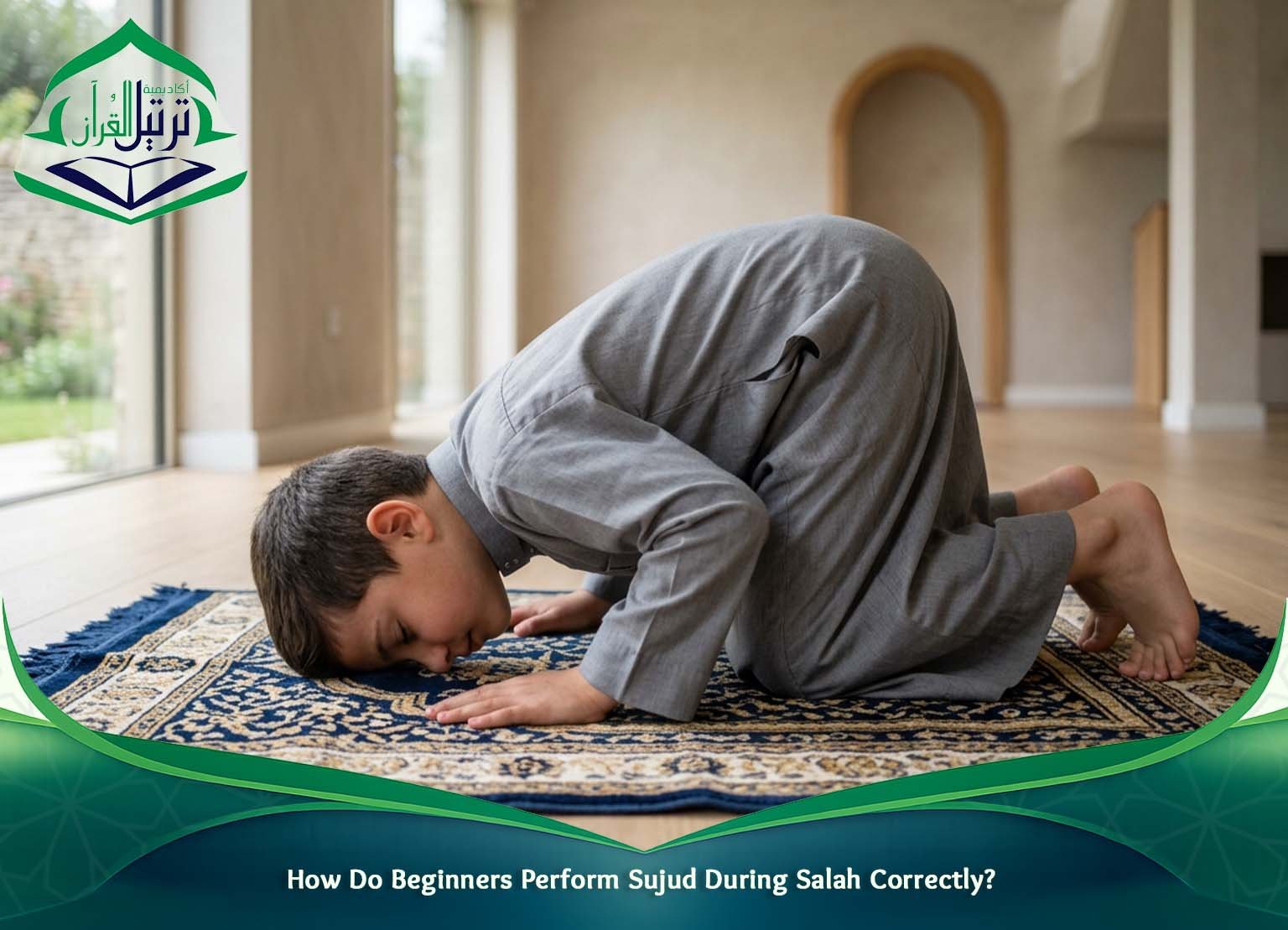
The next stage in learning how to pray Salah for beginners is performing Sujud. Move into prostration while saying:
Allahu Akbar
During Sujud, seven parts of the body should touch the ground:
- The forehead and nose
- Both hands
- Both knees
- The toes of both feet
Sujud is one of the most meaningful moments in Salah because it represents complete humility and submission before Allah.
Recite Supplication During Sujud
While in prostration, say:
Subhana Rabbiyal A’la
Meaning: “Glory be to my Lord, the Most High.”
A Muslim should take time during Sujud to remember Allah, ask for forgiveness, and make sincere supplications.
Sit Between the Two Sujud
After the first Sujud, sit briefly while saying:
Allahu Akbar
During this sitting position, many Muslims recite:
Rabbighfir li
Meaning: “My Lord, forgive me.”
This short pause allows the worshipper to remain calm and continue the prayer with full concentration.
Complete the Second Sujud
After sitting, perform the second Sujud while saying:
Allahu Akbar
Repeat:
Subhana Rabbiyal A’la
Completing the second Sujud finishes one Rak’ah. If more Rak’ahs are required, the worshipper stands and continues the same steps.
Continue Salah With Additional Rak’ahs
When learning how to pray Salah for beginners, understanding the structure of Rak’ahs is essential. Each Rak’ah follows a similar pattern, including standing, Quran recitation, Ruku, and Sujud.
The number of Rak’ahs depends on the specific prayer being performed:
- Fajr: two Rak’ahs
- Dhuhr: four Rak’ahs
- Asr: four Rak’ahs
- Maghrib: three Rak’ahs
- Isha: four Rak’ahs
Recite Tashahhud Before Ending Salah
At the end of the second Rak’ah and the final sitting of Salah, Muslims recite At-Tashahhud while sitting calmly.
During this position:
- Sit with tranquility.
- Place your hands on your thighs.
- Raise the right index finger according to the practice followed by many Muslims.
In the final sitting, the worshipper also recites Salat Ibrahimiyyah and may make additional authentic supplications before completing the prayer.
Understanding Tashahhud is an important step for anyone learning how to pray Salah for beginners because it prepares the worshipper to conclude Salah correctly. Parents can also use practical ideas from How to Keep Kids Motivated to Learn Quran Online to make online learning more engaging for children.
End Salah With Tasleem
The prayer is completed by turning the head to the right and then to the left while saying:
Assalamu Alaikum wa Rahmatullah
This ending is called Tasleem, and it marks the completion of Salah.
By following these steps carefully and practicing regularly, beginners can gradually learn how to pray Salah correctly while improving their confidence, understanding, and connection with Allah.
How Many Rak’ahs Are in the Five Daily Prayers?
Every Muslim performs five obligatory daily prayers, each consisting of a specific number of mandatory Rak’ahs.
- Fajr Prayer: 2 obligatory Rak’ahs
- Dhuhr Prayer: 4 obligatory Rak’ahs
- Asr Prayer: 4 obligatory Rak’ahs
- Maghrib Prayer: 3 obligatory Rak’ahs
- Isha Prayer: 4 obligatory Rak’ahs
In addition to these obligatory units, Muslims may also perform Sunnah and Nafl prayers, following the example of Prophet Muhammad ﷺ. These voluntary prayers increase reward and strengthen one’s relationship with Allah, although they are not compulsory.
For students learning at Tarteel Online Quran Academy, teachers often introduce one prayer at a time, allowing beginners to build confidence gradually before memorizing the complete daily Salah routine. This structured approach makes learning easier and helps students develop correct prayer habits from the beginning.
Why Is Salah Important in Every Muslim’s Life?
Learning how to pray Salah for beginners is about much more than memorizing movements and recitations. Salah is one of the Five Pillars of Islam and serves as a daily reminder of a Muslim’s relationship with Allah. Every prayer offers an opportunity to pause, reflect, seek forgiveness, and renew faith regardless of life’s challenges. Beyond fulfilling a religious obligation, Salah provides many spiritual and personal benefits, including:
- Strengthening your connection with Allah through regular prayer and remembrance.
- Developing discipline by maintaining consistent daily worship.
- Increasing inner peace, emotional stability, and spiritual comfort.
- Encouraging gratitude, patience, and trust in Allah.
- Helping Muslims avoid sinful actions by keeping Allah’s remembrance throughout the day.
- Building humility and sincerity through continuous acts of worship.
Allah highlights the importance of consistent prayer in the Quran, emphasizing that those who maintain their prayers are among the successful believers. For beginners, establishing the habit of praying on time is just as important as learning the correct movements. Beginners should become familiar with Common Mistakes When Learning Tajweed so they can recognize and gradually correct common recitation errors.
What Should You Do Before Performing Salah?
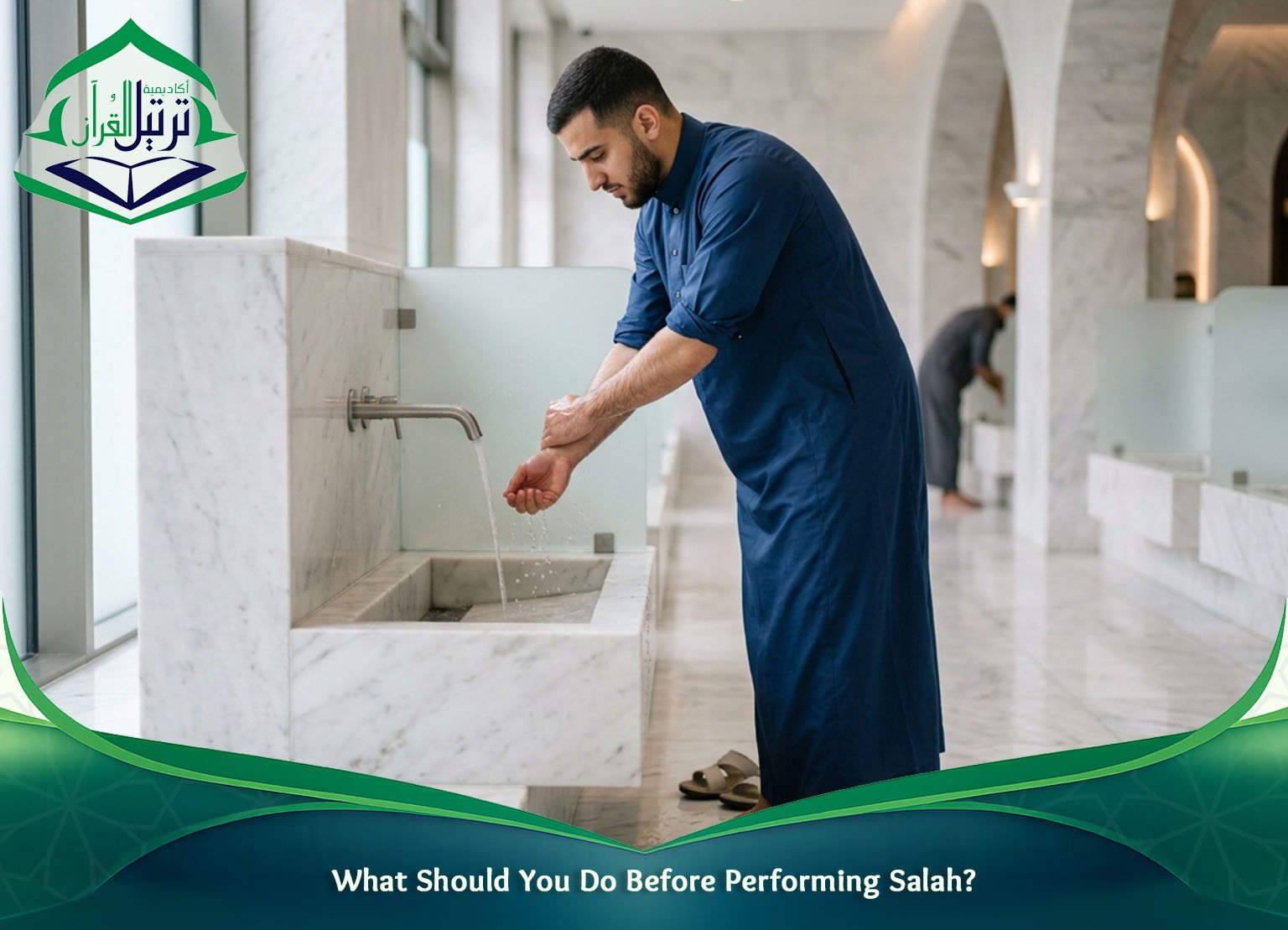
Preparation is an essential part of Salah. Before beginning the prayer, ensure that both your body and your surroundings meet the requirements of Islamic worship.
Perform Wudu Properly
A valid wudu (ablution) is required before every Salah unless your previous wudu remains valid. Purification prepares both the body and mind for worship.
Wear Appropriate Clothing
Your clothing should be clean and cover the required parts of the body.
* Men: Cover the area between the navel and the knees.
* Women: Cover the entire body except the face and hands according to the majority of scholars.
Loose, modest clothing also helps maintain focus during prayer.
Choose a Clean Place
Salah may be performed almost anywhere as long as the place is clean and free from impurities. Many Muslims use a prayer mat to help maintain cleanliness and concentration.
Face the Qiblah
Before starting, make sure you are facing the direction of the Ka’bah in Makkah. Today, many smartphone applications and digital compasses make finding the Qiblah simple for beginners. Adults with limited free time can benefit from Quran Memorization Tips for Busy Adults when creating a practical routine around their work and other responsibilities.
Pray at the Correct Time
Each of the five daily prayers has a specific time window, and performing Salah within its prescribed time is one of the essential conditions of valid prayer. Understanding prayer times is an important part of learning Islam, especially for beginners and those joining flexible schedule online Quran classes, where students learn the basics of worship step by step.
Preparing carefully before each prayer allows beginners to perform Salah with confidence, concentration, and a better understanding of Islamic practices.
Common Mistakes Beginners Should Avoid During Salah
Making mistakes while learning Salah is completely normal. Every Muslim starts somewhere, and improvement comes through regular practice and sincere effort. Being aware of common errors helps beginners build correct prayer habits from the beginning.
Some of the most common mistakes include:
- Rushing through the prayer without pausing between movements.
- Incorrect pronunciation of Surah Al-Fatihah.
- Forgetting to maintain a straight back during Ruku.
- Not placing all required body parts correctly during Sujud.
- Looking around instead of focusing on the place of prostration.
- Skipping tranquility between prayer positions.
- Delaying Salah without a valid reason.
For beginners, learning from experienced teachers can prevent repeated mistakes and provide proper guidance. This is especially helpful for students attending Quran classes for converts to Islam, as they often need patient explanations and practical support while developing their Islamic knowledge.
Instead of becoming discouraged, correct one mistake at a time. Gradual improvement is the most effective way to master how to pray Salah for beginners.
Tips to Memorize Salah More Quickly
Many new Muslims and children worry about memorizing Arabic recitations during prayer. Fortunately, learning becomes much easier when the process is divided into manageable steps. These practical tips can help:
- Learn one prayer position before moving to the next.
- Memorize Surah Al-Fatihah before learning additional Surahs.
- Practice daily prayers consistently.
- Listen to slow Quran recitations while reading the transliteration.
- Repeat each supplication several times every day.
- Pray alongside a knowledgeable family member or teacher.
- Review mistakes immediately after each prayer.
Understanding Quran recitation rules can also improve confidence during Salah. Students who want to improve pronunciation may benefit from learning the difference between Hafs and Warsh Quran, as different Quran recitation styles are taught in Islamic learning programs around the world. Consistency is far more valuable than trying to memorize everything in one day.
Learn Salah with Qualified Teachers at Tarteel Online Quran Academy
Although many people begin learning independently, studying with qualified teachers often speeds up progress and improves accuracy. Personalized guidance allows beginners to correct pronunciation, understand each movement, and gain confidence while practicing Salah.
At Tarteel Online Quran Academy, students receive structured lessons designed specifically for beginners. Experienced Quran teachers provide one-to-one guidance, helping learners understand every step of Salah at a comfortable pace. Students benefit from:
- Individual online lessons.
- Experienced male and female Quran teachers.
- Step-by-step Salah instruction.
- Tajweed support for accurate Quran recitation.
- Flexible schedules for children and adults.
- Regular progress assessments.
- A supportive learning environment that encourages steady improvement.
Choosing the right teacher is an important step in Quran learning. Knowing how to choose an online Quran teacher helps students find qualified instructors who provide reliable guidance, correct pronunciation, and a suitable learning approach.
Whether you’re a new Muslim, a parent teaching your child, or someone returning to regular worship, professional guidance can make learning easier and more enjoyable.
By practicing consistently and learning from qualified instructors, you’ll soon feel confident performing every prayer correctly while strengthening your relationship with Allah. Learners may also ask How Long Does It Take to Memorize the Quran when setting realistic expectations for their memorization journey.
Beginner’s Guide to Salah: Building Confidence Through Practice
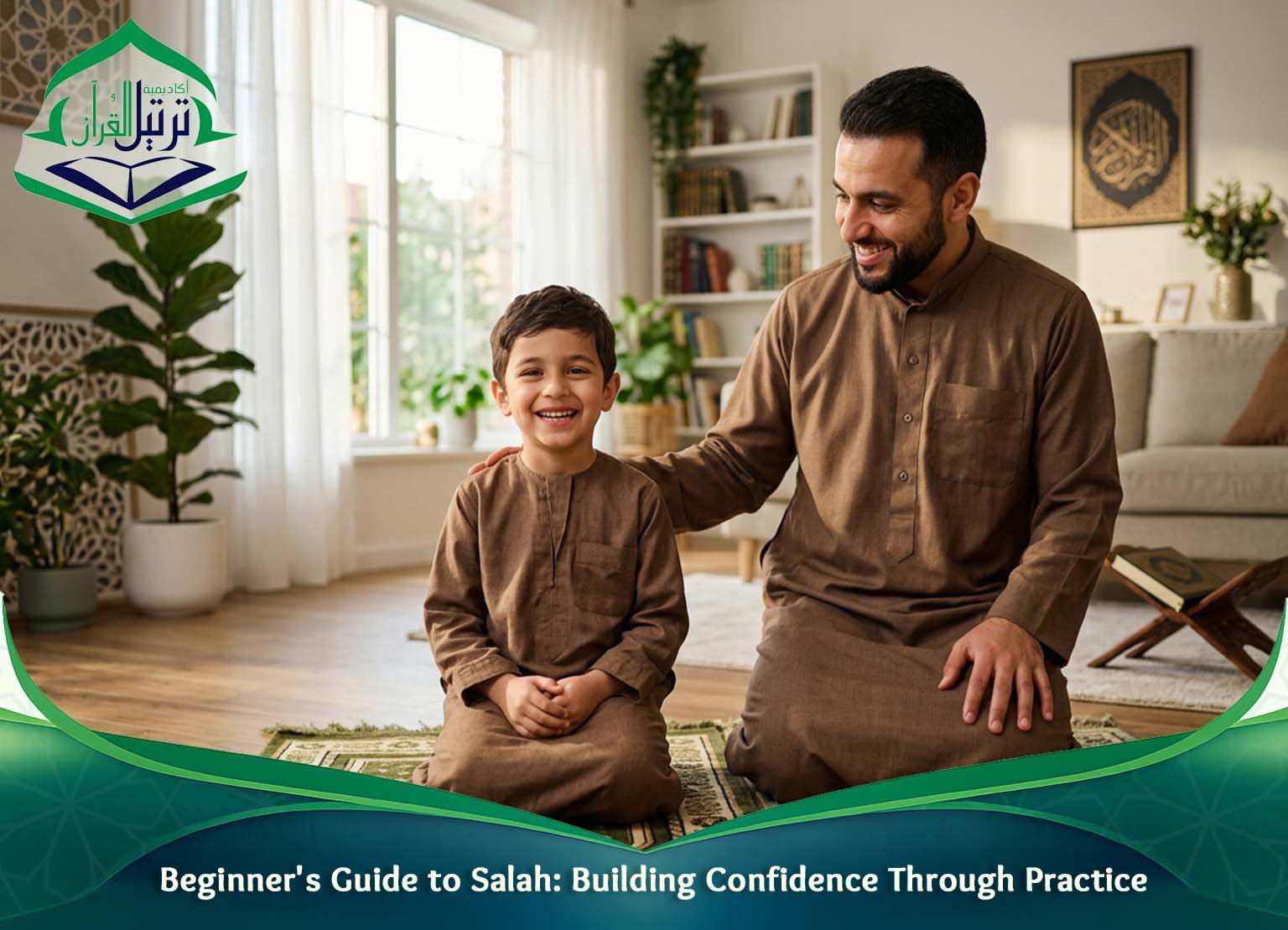
Learning how to pray Salah for beginners is a gradual journey that requires patience, consistency, and regular practice. Many new learners feel uncertain at the beginning because Salah includes different movements, Arabic recitations, and specific prayer steps. However, with a structured approach, every beginner can develop confidence and perform Salah correctly.
For those who are exploring Islam more deeply, understanding basic Islamic concepts can make worship more meaningful. Learning what is Islamic fiqh helps beginners understand Islamic rulings, daily practices, and the principles behind different acts of worship, including Salah.
The best way to improve is to focus on one part of the prayer at a time. Start by learning the basic positions, then memorize essential recitations such as Surah Al-Fatihah and the common supplications said during Ruku and Sujud. Trying to memorize everything at once can feel overwhelming, while gradual learning makes the process easier and more effective.
Beginners should also practice maintaining calmness and concentration during Salah. The goal is not only to complete the physical movements but also to understand the meaning behind each action and build a stronger connection with Allah.
Regular prayer practice helps transform Salah from a lesson into a natural part of daily life. With time, beginners become more comfortable with the sequence of movements, improve Quran recitation, and experience greater confidence and peace during worship. Beginners can build a stronger foundation by studying Tajweed Rules for Beginners Explained and applying these rules during regular Quran practice.
Learning with a qualified Quran teacher can also make the journey easier. A teacher can provide guidance, correct mistakes, improve pronunciation, and explain the meaning of each step, helping beginners learn Salah in a clear and supportive way.
Frequently Asked Questions About How to Pray Salah for Beginners
Many new Muslims and beginners have questions beyond the basic prayer steps. Below are answers to some common concerns that can help you feel more confident as you continue learning how to pray Salah for beginners.
1. Can I pray Salah if I have not memorized all the Arabic recitations?
Yes. If you are still learning, focus on memorizing Surah Al-Fatihah first because it is essential for every Rak’ah. Continue learning the remaining supplications gradually. Allah knows your sincere effort and rewards those who strive to improve their worship.
2. How long does it usually take to learn Salah?
The learning time varies from person to person. Many beginners can memorize the basic prayer movements and recitations within a few weeks through daily practice. Consistency is much more important than learning everything quickly.
3. Is it acceptable to use a prayer guide while learning?
Yes. Many scholars allow beginners to use a printed guide or educational resource while they are learning the prayer. The goal is to help new Muslims and children become familiar with the correct order until they can perform Salah confidently from memory.
4. What should I do if I forget part of the prayer?
Do not panic. If you forget a word or make a small mistake, continue your prayer as best as you can. As your knowledge grows, these mistakes will naturally become less frequent. Learning Salah is a gradual journey, and every sincere effort brings you closer to mastering your worship.
In conclusion, learning how to pray Salah for beginners is one of the most meaningful steps in every Muslim’s journey. While the prayer may seem detailed at first, it becomes easier with regular practice, patience, and sincere dedication. By understanding each movement, memorizing the essential recitations, and praying consistently every day, you’ll gradually develop confidence and experience the spiritual peace that Salah brings.
Remember that every expert was once a beginner. Don’t feel discouraged if you make mistakes during the learning process. Instead, focus on improving one step at a time, ask questions when needed, and continue practicing until the prayer becomes a natural part of your daily routine.
If you would like structured guidance from experienced Quran teachers, Tarteel Online Quran Academy provides personalized online lessons for children, adults, and new Muslims. Through one-on-one instruction, students receive practical support in learning every aspect of Salah, improving Quran recitation, and building a strong Islamic foundation in a comfortable and encouraging environment.
Start your journey today, stay consistent, and with Allah’s help, you’ll soon perform every prayer with confidence, understanding, and devotion.