
Isha prayer is the fifth obligatory prayer in Islam and an important part of a Muslim’s daily worship. Performed at night, it offers an opportunity to remember Allah, seek His guidance, and end the day with devotion. For beginners, learning how to pray correctly involves understanding the prayer time, preparing through wudu, performing the required rak‘ahs, and reciting the essential words and supplications in the correct order.
Although the movements may seem unfamiliar at first, the process becomes easier with regular practice. This guide explains each stage clearly, from preparing for Salah to completing the final greeting. It also covers the number of rak‘ahs, common mistakes, recommended practices, and ways to develop consistency.
With structured guidance from Tarteel Online Quran Academy, learners can build their understanding of prayer, improve their Arabic recitation, and develop greater confidence in their daily worship.
Understanding Isha Prayer and Its Role in Daily Worship
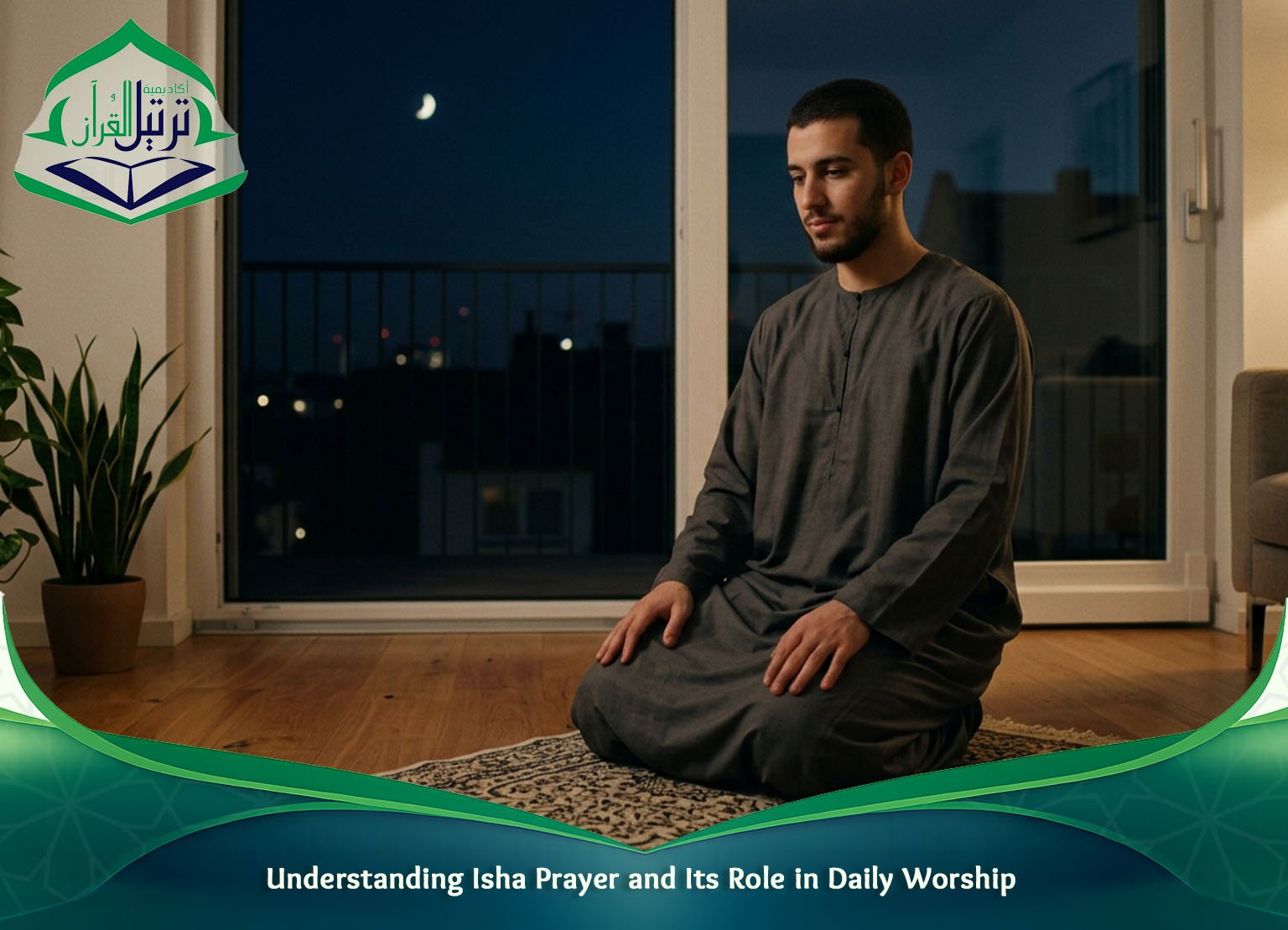
Isha prayer, also known as Salat al-Isha, is the final of the five obligatory daily prayers. Muslims perform it after the evening twilight disappears, marking the beginning of its prescribed time according to Islamic prayer-time calculations and scholarly guidance.
Unlike a voluntary act of worship, the obligatory Isha Salah is a religious duty for Muslims who are required to pray. It combines Quranic recitation, remembrance of Allah, physical movements, and supplications that express humility and devotion.
The prayer also provides a natural pause after the activities of the day. Instead of ending the evening with distractions alone, a Muslim can dedicate time to worship, reflect on personal conduct, and seek forgiveness.
For someone learning Salah for the first time, it is helpful to understand three essential points:
- Isha is the fifth obligatory daily prayer.
- Its obligatory portion consists of four rak‘ahs.
- Its performance follows the established structure of Salah, including standing, bowing, prostration, and sitting for the prescribed recitations.
Start Your Islamic Learning Journey Today
Join Tarteel Online Quran Academy today and begin a meaningful Islamic learning experience designed for children, adults, and beginners worldwide. Our qualified Quran teachers provide interactive lessons, flexible schedules, and personalised guidance to help students improve their Quran recitation, understand Islamic teachings, and strengthen their connection with Allah.
Through structured online classes, learners can study comfortably from home while receiving professional support at every step. Start your journey today and build a strong spiritual foundation with trusted Quran education.

Why Is Isha Prayer Important?
The importance of Isha prayer extends beyond completing a daily religious obligation. It helps Muslims maintain a consistent relationship with Allah and remember their responsibilities throughout the day.
Furthermore, regular prayer encourages discipline. A person must make time for worship even after a busy schedule, which can gradually establish a more organised daily routine.
The night prayer can also provide a peaceful moment for reflection. During Salah, worshippers turn their attention away from everyday concerns and focus on Quranic verses, remembrance, and supplication. Its benefits include:
- Spiritual connection: Prayer gives Muslims a regular opportunity to worship Allah and seek His mercy.
- Daily discipline: Observing the prayer at its prescribed time encourages consistency.
- Reflection and repentance: The quiet of the evening offers an opportunity to seek forgiveness and consider personal improvement.
- Quranic engagement: Recitation during prayer encourages Muslims to maintain a relationship with the Quran.
- Mindful worship: Learning the meanings of recitations can help worshippers approach Salah with greater understanding.
However, these benefits should not be treated as guaranteed worldly outcomes. The central purpose of Salah is worship and obedience to Allah.
What Is the Correct Time for Isha Prayer?
Knowing when to perform Isha prayer is essential because each obligatory prayer has a prescribed time. Isha generally begins when the evening twilight has disappeared. The exact starting time varies according to the season, geographical position, calculation method, and the guidance followed by the local Muslim community.
Therefore, sunset alone does not determine the beginning of Isha. Sunset marks the time associated with Maghrib, while Isha begins later after the relevant twilight has disappeared. To identify the appropriate time, follow these practical steps:
- Consult a reliable prayer timetable for your location.
- Check the listed Isha time rather than estimating it from sunset.
- Follow the calculation method or scholarly guidance used by your trusted local authority.
- Aim to pray within the prescribed time instead of repeatedly delaying Salah.
- If you are uncertain about the latest permissible time, ask a knowledgeable scholar about the guidance applicable to your circumstances.
Scholars discuss the preferred and latest times for performing Isha, and some details differ between legal schools. Consequently, it is better to follow reliable guidance rather than assume that one fixed clock time applies everywhere.
Can You Delay Isha Prayer Until Late at Night?
A Muslim may have questions about performing Isha later in the evening. In general, delaying the prayer within its permissible time can be acceptable under appropriate circumstances, but deliberately postponing an obligatory prayer until its time expires should be avoided.
The exact boundaries and recommendations require attention to the scholarly guidance being followed. Someone who works late, cares for family members, or has an unusual schedule should plan ahead so that the prayer is not missed.
A practical approach is to check the prayer timetable early, identify a suitable opportunity, and prepare for worship before becoming tired.
How Many Rak‘ahs Are in Isha Prayer?
The obligatory Isha prayer consists of four rak‘ahs. A rak‘ah is one complete unit of Salah containing standing, Quranic recitation, bowing, and prostration, along with the associated movements and recitations.
However, the full evening prayer routine may include additional Sunnah and voluntary prayers. Their classification, number, and recommended arrangement can vary according to the legal school followed.
| Prayer component | Number of rak‘ahs |
|---|---|
| Obligatory Isha prayer (Fard) | 4 |
| Sunnah prayers associated with Isha | Depends on the practice followed |
| Witr prayer | Commonly 1 or 3, depending on the practice followed |
| Additional voluntary prayers | Optional |
The table distinguishes the obligatory prayer from additional worship. The four Fard rak‘ahs are the essential portion being explained in this guide.
Witr is a separate prayer performed after Isha, and its ruling and method differ among Islamic legal schools. Similarly, Sunnah prayers should not be confused with the four obligatory rak‘ahs.
If you are unsure about the complete arrangement, Tarteel Online Quran Academy can help learners study the structure of Salah and understand the differences between obligatory and recommended acts.
What Should You Do Before Isha Prayer?
Before beginning Salah, make sure that its basic conditions are fulfilled. Preparation helps the worshipper focus on the prayer rather than interrupting it to resolve avoidable issues.
1. Perform Wudu
Wudu is the prescribed purification performed before Salah when it is required. It includes washing the face, arms, and feet, along with wiping the head, according to the established method.
Make sure you understand the correct sequence and the conditions that affect the validity of purification. If wudu has been invalidated, renew it before praying.
2. Ensure Cleanliness
The body, clothing, and place of prayer should be free from relevant impurities. Choose a clean, suitable space where you can stand, bow, and prostrate comfortably.
3. Cover the Required Parts of the Body
Wear clothing that satisfies the Islamic requirements for Salah. The precise details of required covering differ for men and women, so learners should consult reliable guidance appropriate to their circumstances.
Clothing should also allow the movements of prayer to be performed properly.
4. Face the Qibla
The Qibla is the direction of the Kaaba in Makkah. Use a reliable method to identify the correct direction when needed, particularly if you are unfamiliar with your surroundings.
5. Make the Intention
The intention, or niyyah, is the resolve to perform the particular prayer for Allah. It is fundamentally an act of the heart; a special spoken formula is not universally required. Once these preparations are complete, you can begin the prayer.
How to Perform Isha Prayer Step by Step?
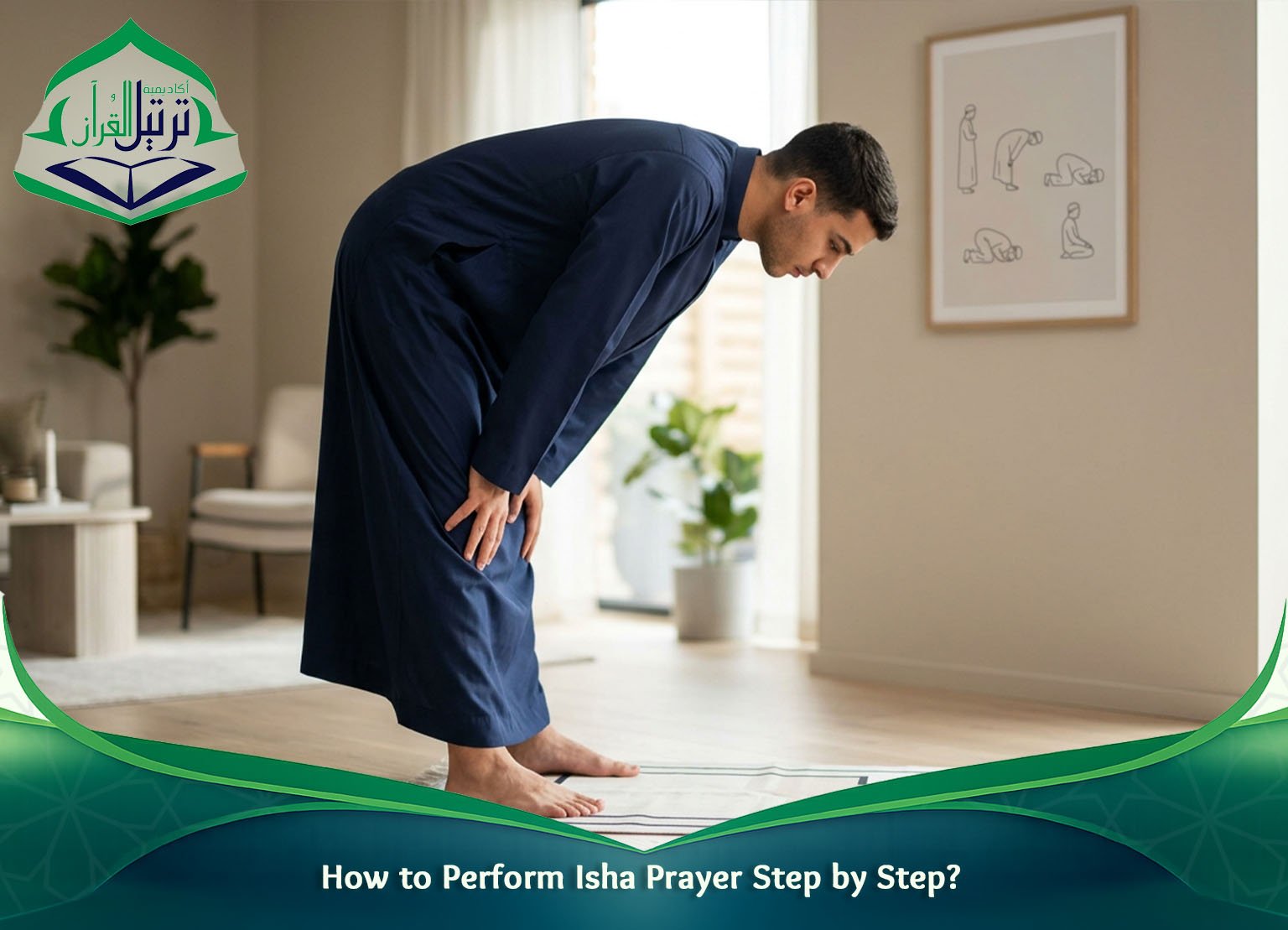
Learning the movements in sequence makes Isha prayer easier to understand. This guide explains how to perform the four obligatory rak‘ahs in a clear, beginner-friendly format.
Recognised Islamic schools differ on certain details, including hand placement, recitation, and sitting positions. Therefore, consult a reliable teacher who can explain the method you follow.
First Rak‘ah: Begin with Takbir and Recitation
The first rak‘ah introduces the main movements and recitations that you will use throughout the prayer.
Step 1: Stand and Begin the Prayer
Face the Qibla and say “Allahu Akbar,” meaning “Allah is the Greatest.” This opening declaration, called Takbir al-Ihram, marks the beginning of Salah. Once you begin, maintain the appropriate posture and focus on your worship.
Step 2: Recite the Opening Supplication
If your usual practice includes Du‘a al-Istiftah, recite it after the opening Takbir. Islamic sources report several authentic versions of this supplication.
Because this supplication is a Sunnah practice rather than a replacement for obligatory recitations, beginners can learn it gradually with guidance from a reliable teacher.
Step 3: Recite Surah Al-Fatihah
Al-Fatihah opens the Quran. Learn its Arabic pronunciation carefully because its recitation plays an essential role in Salah, subject to the relevant Islamic rulings. The surah begins:
“Bismillahir-Rahmanir-Raheem.”
It praises Allah, acknowledges His mercy and sovereignty, and asks Him to guide us to the straight path.
Recite each verse attentively instead of rushing through the words. If you are still learning Arabic, practice with a qualified teacher outside Salah.
Step 4: Recite Another Portion of the Quran
After Al-Fatihah, recite another surah or suitable verses according to the rules of the prayer. Beginners often choose Surah Al-Ikhlas because it is relatively short. Its opening is:
“Qul Huwallahu Ahad.”
By learning a short surah accurately, you can strengthen your Quranic recitation skills and gradually expand your knowledge.
Step 5: Perform Ruku
Say “Allahu Akbar” as you move into the bowing position. Keep your posture stable and recite:
“Subhana Rabbiyal-Adheem.”
This phrase means, “Glory be to my Lord, the Magnificent.”
Many Muslims repeat this remembrance three times. Ask a qualified teacher to explain the relevant rulings on the minimum and recommended repetitions.
Step 6: Rise from Ruku
Return to a standing position and say:
“Sami‘Allahu liman hamidah.”
Then recite:
“Rabbana wa lakal-hamd.”
These expressions acknowledge Allah’s praise and greatness. Practice their pronunciation regularly until you can recite them confidently.
Step 7: Perform the First Sujood
Say “Allahu Akbar” as you move into prostration. Place your body in the prescribed position and maintain composure.
Recite:
“Subhana Rabbiyal-A‘la.”
This phrase means, “Glory be to my Lord, the Most High.”
Step 8: Sit Between the Two Prostrations
Rise from the first prostration and sit briefly. During this sitting, you can recite the commonly taught supplication:
“Rabbighfir li.”
It means, “My Lord, forgive me.”
Step 9: Perform the Second Sujood
Return to prostration and repeat the prescribed remembrance. This second prostration completes the first rak‘ah.
Next, rise to begin the second rak‘ah.
Second Rak‘ah: Repeat the Main Movements
Follow the same basic sequence during the second rak‘ah. Stand, recite Surah Al-Fatihah and another portion of the Quran, bow, rise again, and perform the two prostrations with their prescribed remembrances.
After the second prostration, sit for the first Tashahhud.
Begin the Tashahhud with:
“At-tahiyyatu lillahi was-salawatu wat-tayyibat.”
During this sitting, recite the prescribed greetings and praises, including the testimony of faith. Learn the complete wording from a reliable prayer guide rather than relying on an incomplete transliteration. After completing the first Tashahhud, stand for the third rak‘ah.
Third Rak‘ah: Continue the Obligatory Prayer
Stand upright and recite Al-Fatihah. Then perform Ruku, return to standing, and complete both prostrations.
In the standard form of the obligatory Isha prayer, worshippers generally recite Al-Fatihah alone in the third and fourth rak‘ahs, unlike the first two rak‘ahs, which include additional Quranic recitation.
However, some details differ according to the school of jurisprudence and whether you pray alone or behind an imam. Consult a qualified teacher to learn the method that applies to your circumstances.
After the second prostration, rise for the fourth and final rak‘ah.
Fourth Rak‘ah: Complete the Prayer
Stand and recite Al-Fatihah. Then bow, return to standing, and perform both prostrations.
After the second prostration, sit for the final Tashahhud.
During this sitting, recite the Tashahhud and send blessings upon Prophet Muhammad ﷺ through Salawat, commonly known as Salat Ibrahimiyyah. Learn the complete Arabic wording and practice its pronunciation carefully.
Finally, conclude the prayer with Tasleem according to the method you follow. A commonly recited greeting is:
“As-salamu alaykum wa rahmatullah.”
Turn your head toward the right and left as your tradition prescribes. These final greetings complete the four obligatory rak‘ahs.
What Should You Recite After Isha Prayer?
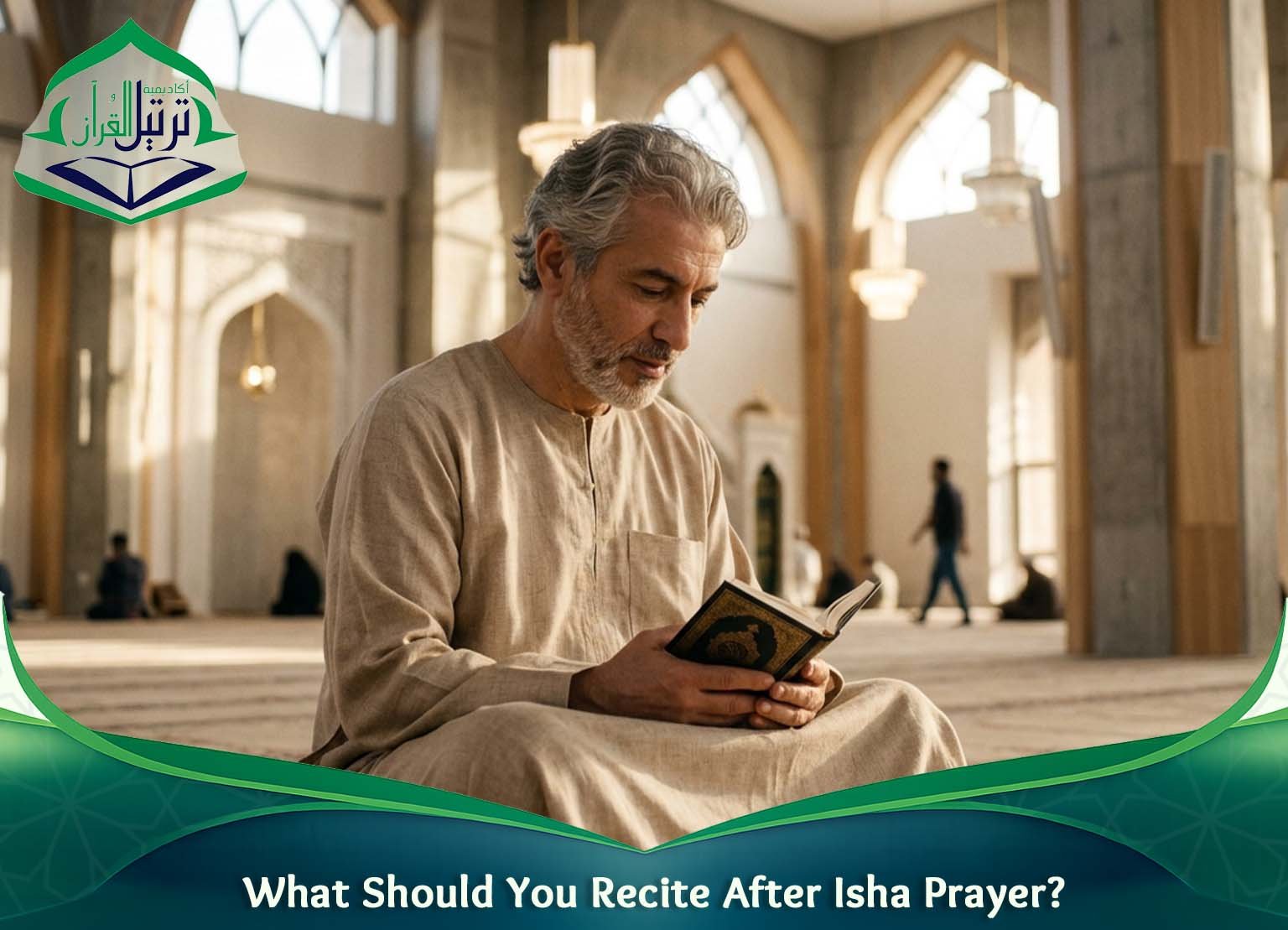
After completing Isha, you can continue worship through remembrance and supplication. These practices help you remember Allah beyond the obligatory prayer.
Islamic teachings include several established post-prayer remembrances, but Muslims do not all follow an identical collection of voluntary supplications. Consult reliable Islamic sources to distinguish established remembrances from personal duas. Common practices include:
- Asking Allah for forgiveness.
- Reciting established post-prayer remembrances.
- Praising Allah and declaring His greatness.
- Making sincere personal supplications.
- Reciting Quran outside the obligatory prayer.
- Practicing the prescribed evening and bedtime remembrances.
One supplication that Muslims commonly learn is:
“Allahumma a‘inni ‘ala dhikrika wa shukrika wa husni ‘ibadatik.”
It means, “O Allah, help me to remember You, thank You, and worship You well.”
Through this supplication, Muslims ask Allah to help them maintain remembrance, gratitude, and sincere worship.
When learning Arabic supplications, study their meanings alongside their pronunciation. This approach can help you understand your words and worship with greater awareness.
Common Mistakes to Avoid During Isha Prayer
Beginners sometimes worry about forgetting a phrase or performing a movement incorrectly. Learn systematically, seek reliable guidance, and address mistakes without unnecessary anxiety. If you find Quranic pronunciation difficult, reviewing Common Mistakes When Learning Tajweed can help you recognize frequent errors and understand why accurate articulation matters during recitation.
Delaying Prayer Without a Valid Reason
A busy schedule can tempt you to postpone Salah repeatedly. Build a consistent routine to help you pray within the prescribed time.
Check the prayer timetable in advance and choose a practical opportunity to perform Salah. Planning ahead can help you maintain your daily prayers without unnecessary delays.
Rushing Through the Movements
Moving too quickly can prevent you from maintaining the required stillness. Perform each position calmly instead of treating prayer as a sequence to complete as quickly as possible.
Take enough time to settle into each position and follow the correct sequence. Practising the movements outside prayer can also help beginners feel more confident.
Mispronouncing Quranic Recitation
Some Arabic letters sound similar to beginners, but their articulation can affect the words they recite. Practise Al-Fatihah and other frequently recited passages with a qualified teacher who can correct your pronunciation.
Learners should also study the foundational principles of Quranic recitation gradually. The guide Tajweed Rules for Beginners Explained introduces essential rules that can help students improve their pronunciation and recite more accurately.
Confusing Obligatory and Voluntary Rak‘ahs
Distinguish the four obligatory rak‘ahs from additional Sunnah and voluntary prayers. This distinction helps you understand the structure of the complete evening routine.
Learn the basic requirements first, then explore recommended prayers through reliable Islamic guidance. If you are unsure about a particular ruling, consult a knowledgeable scholar.
Assuming Every Jurisprudential Detail Is Identical
Recognized Islamic schools sometimes differ on hand placement, recitation, and sitting positions. Instead of combining instructions from unrelated sources, follow a reliable method and ask a knowledgeable scholar when you have questions.
Becoming Discouraged by Learning Difficulties
You may need time to memorize the recitations and movements. Consistent practice, patient correction, and regular review will help you progress without expecting immediate perfection.
How Can Beginners Learn Isha Prayer More Easily?
Learning Salah requires more than memorizing a list of actions. You also need to understand the sequence of movements, learn essential Arabic expressions, and develop confidence through practice. A structured learning plan can make this process easier.
- Start with the basic structure. Learn the opening Takbir, Al-Fatihah, Ruku, standing after bowing, the two prostrations, and the sitting positions.
- Practise short recitations. Memorize Al-Fatihah accurately, then learn short surahs that Muslims commonly recite during prayer.
- Understand the meanings. Study the meaning of each recitation to understand its role in Salah.
- Seek guided correction. Ask a knowledgeable teacher to identify pronunciation errors, explain movements, and answer your questions.
- Review regularly. Practise briefly outside the obligatory prayer to reinforce what you have learned.
- Follow dependable religious guidance. Consult a qualified scholar about questions concerning prayer validity or mistakes instead of relying on unverified online advice.
Beginners who want to expand their Quran memorization should also set realistic goals and review previously learned passages regularly. The guide How Long Does It Take to Memorize the Quran explains why progress depends on factors such as consistency, revision, and the learner’s starting level.
Tarteel Online Quran Academy can support learners who want a structured approach to Quran recitation and Islamic learning. Organized lessons can help students assess their current skills, address specific difficulties, and develop their abilities progressively.
How Can Tarteel Online Quran Academy Support Your Learning?
Instruction becomes more useful when it addresses each learner’s needs. Some beginners need help recognizing Arabic letters, while others understand the prayer movements but want to improve Quranic pronunciation or memorization.
Tarteel Online Quran Academy can serve as a learning option for students seeking structured Quran education and guidance in foundational Islamic knowledge. A useful learning program should help students:
- Understand the essential parts of Salah.
- Improve their pronunciation of Quranic words.
- Memorize frequently used surahs and supplications.
- Learn the correct sequence of prayer movements.
- Identify skills that require further practice.
- Establish a consistent study routine.
Parents who want their children to develop strong Quran learning habits should consider the instructor’s teaching approach, communication skills, and ability to adapt lessons to the child’s age. The Best Quran Teacher for My Child Checklist can help parents evaluate these factors before choosing a teacher.
Beginners benefit most from clear, patient instruction that matches their current abilities. Encourage students to ask questions whenever they encounter unfamiliar religious terminology or differences between prayer methods.
Tarteel Online Quran Academy can connect Quran recitation with a broader understanding of Islamic worship. Before enrolling, verify the curriculum, instructor qualifications, and available course arrangements directly.
The goal extends beyond memorizing a sequence of movements. Students should understand their recitations, learn the prayer according to reliable Islamic guidance, and develop a lasting habit of worship.
How to Build a Consistent Isha Prayer Routine?
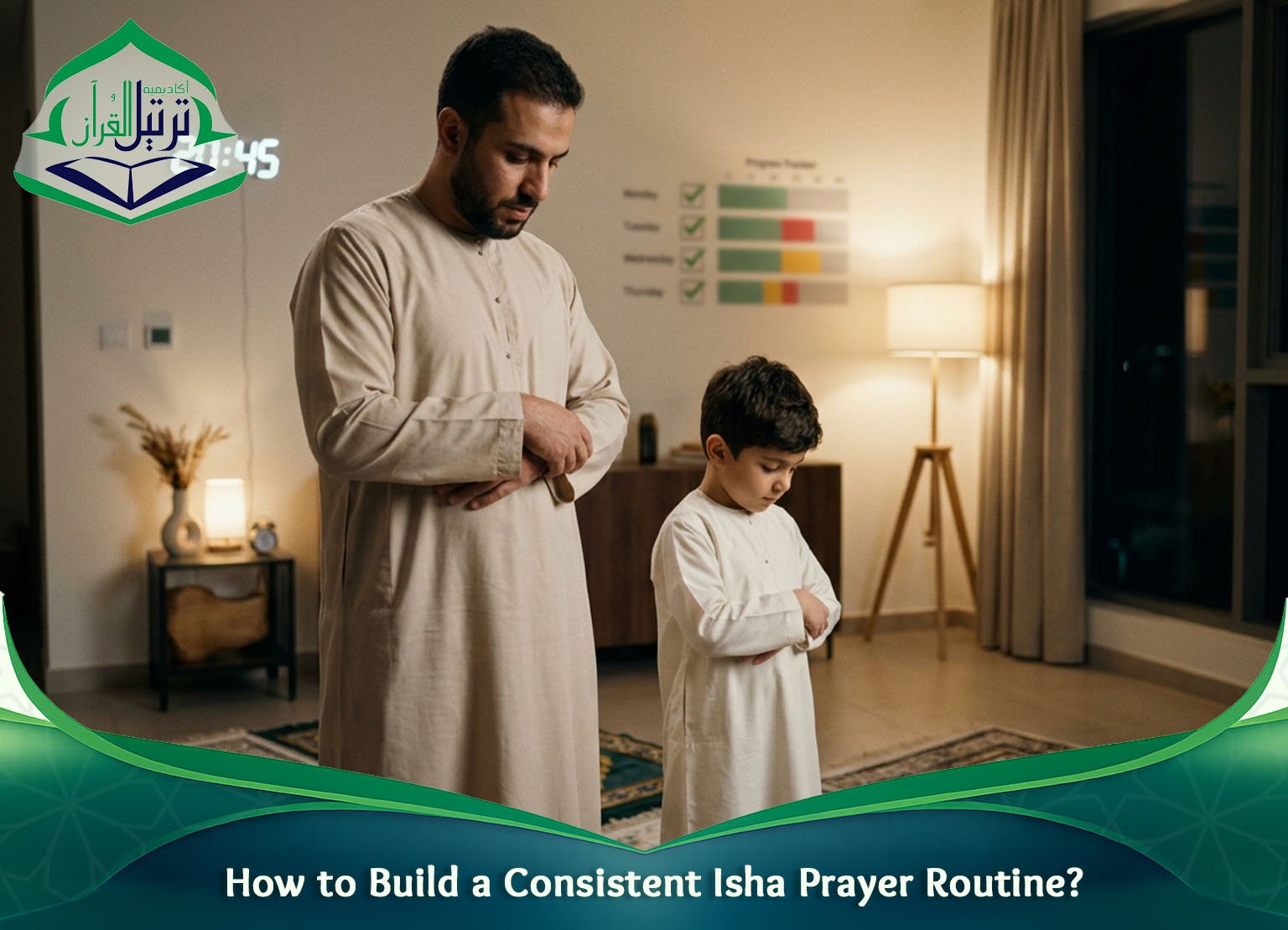
You can maintain a consistent Isha prayer routine more easily by including Salah in your daily schedule instead of leaving it until the end of the evening without planning. Start by checking the prayer timetable and choosing a suitable time within the prescribed period. Prepare your prayer clothes and space in advance, complete wudu, and remove distractions before beginning Salah. Follow these practical steps:
- Check the prayer timetable early in the evening.
- Prepare your prayer space and complete wudu.
- Put away distractions before starting Salah.
- Perform the obligatory prayer calmly and with concentration.
- Recite established remembrances or spend a little time reading the Quran afterward.
- Review any recitations you are still learning before your next practice session.
During Ramadan, organise your schedule around fasting, Quran recitation, and night worship. Read the guide to Ramadan fasting rules for more information.
Since Isha is one of the five daily prayers, a routine helps maintain consistency. Learn more about Fajr Salah to prepare for the next day’s worship.
When teaching children or new Muslims, demonstrate each movement clearly and introduce additional recitations gradually. Keep the routine manageable, and seek trustworthy Islamic guidance whenever questions arise.
Frequently Asked Questions About Isha Prayer
Explore these frequently asked questions about Isha prayer to understand its timing, number of rak’ahs, proper performance, and common mistakes beginners should avoid.
What should someone do if they fall asleep before praying Isha?
If someone unintentionally sleeps through the prayer time, they should pray when they wake up and remember the missed prayer, following established Islamic guidance. Deliberately neglecting Salah is a different matter and should not be treated as equivalent to accidental sleep. Anyone with recurring difficulties should seek scholarly advice about their circumstances.
Can a person pray Isha while travelling?
Islamic law provides concessions related to prayer during travel, including rules concerning shortening certain obligatory prayers. Whether and how a concession applies depends on the relevant conditions and the scholarly school being followed. A traveller should learn the applicable rules rather than assume that every prayer can be shortened in the same way.
What happens if someone forgets how many rak‘ahs they have completed?
A worshipper who becomes uncertain about the number of rak‘ahs should follow the established rulings for handling doubt, which depend on the nature of the uncertainty and the applicable scholarly guidance. Because the correct response can vary by circumstance, learning these rules from a qualified teacher is preferable to guessing.
Can someone learn the prayer recitations without understanding Arabic?
Yes. A beginner can start by learning the required Arabic recitations through careful listening, repetition, and guided correction, even if they do not yet understand the language.
In conclusion, Isha prayer is an essential part of a Muslim’s daily worship and a meaningful way to conclude the day with remembrance of Allah. Learning it involves understanding its prescribed time, preparing through purification, completing the four obligatory rak‘ahs, and performing the required recitations and movements in the correct order.
Tarteel Online Quran Academy can be considered by learners seeking structured support in Quran education and foundational Islamic learning. With consistent practice and dependable instruction, students can improve their understanding of Salah and approach their daily worship with greater confidence, care, and devotion.