
How Long Does It Take to Memorize the Quran? is one of the first questions Muslims ask when they begin planning a Hifz journey. There is no single number of months or years that applies to every learner. The timeline depends on the amount of time available each day, previous Quran experience, memorization ability, consistency, revision habits, and the level of support received during the process.
Some learners may follow an intensive schedule and complete their memorization within a relatively short period. Others may need several years because they balance Quran study with school, work, family responsibilities, or other commitments. Both approaches can be meaningful when the learner maintains a sustainable routine.
The important point is that Quran memorization should not be treated as a race. Finishing a large number of pages means little if those pages are quickly forgotten. A strong Hifz plan therefore combines new memorization with continuous revision, accurate recitation, Tajweed, and regular teacher feedback.
This guide explains realistic memorization timelines, the factors that influence progress, different study schedules, and practical ways to retain what you learn with the support of Tarteel Online Quran Academy.
How Long Does It Take to Memorize the Quran? A Realistic Estimate?

For many learners, Quran memorization can take approximately one to five years, although some intensive programs may be shorter and slower part-time plans may take longer.
The standard Madinah Mushaf contains about 604 pages. Therefore, the daily amount a student memorizes has a major effect on the overall timeline.
A simple illustration looks like this:
| Daily New Memorization | Approximate Memorization Period |
|---|---|
| Half a page | Around 3–4 years |
| One page | Around 2 years |
| Two pages | Around 10–12 months |
| Three pages | Around 7–8 months |
These figures are only planning estimates. They do not mean that every learner who memorizes one page per day will finish in exactly two years. Revision days, missed sessions, Ramadan schedules, exams, travel, illness, and changes in personal circumstances can all affect progress.
More importantly, the number of new pages should never be considered separately from revision. A learner who memorizes quickly but reviews poorly may complete the Mushaf sooner but struggle to maintain it later.
For that reason, a realistic Hifz plan should measure retention as well as completion.
Start Your Islamic Learning Journey Today
Join Tarteel Online Quran Academy today and begin a meaningful Islamic learning experience designed for children, adults, and beginners worldwide. Our qualified Quran teachers provide interactive lessons, flexible schedules, and personalized guidance to help students improve their Quran recitation, understand Islamic teachings, and strengthen their connection with Allah.
Through structured online classes, learners can study comfortably from home while receiving professional support at every step. Start your journey today and build a strong spiritual foundation with trusted Quran education.

What Determines How Long It Takes to Memorize the Quran?
The answer to How Long Does It Take to memorize the Quran changes from one person to another because several factors affect the pace of learning.
Daily Time Available
The amount of focused time you can consistently dedicate to Hifz is one of the strongest factors.
For example, a learner who studies for 90 minutes every day has a very different opportunity from someone who can study for only 25 minutes. However, longer study sessions are not automatically better.
A consistent 45-minute routine maintained throughout the week may produce better long-term progress than a four-hour session followed by several days without practice.
Therefore, when creating your plan, consider the schedule you can actually maintain rather than choosing the fastest theoretical timeline.
Previous Quran Experience
Someone who already reads the Quran fluently and has experience with Tajweed may move through new passages more comfortably than a complete beginner.
Previous memorization experience can also help. A student who has already memorized several Surahs may understand how repetition, recall, and revision work.
On the other hand, beginners may need additional time to establish correct pronunciation, reading fluency, and memorization habits before increasing their daily target.
Arabic Language Familiarity
Understanding Arabic can make certain aspects of memorization easier because the learner may recognize vocabulary, sentence structures, and relationships between verses.
Nevertheless, Arabic fluency is not a requirement for Hifz. Many non-Arabic-speaking Muslims successfully memorize the Quran.
In fact, understanding the general meaning of each passage can be helpful even when the learner does not speak Arabic fluently. Meaning provides context, while repetition builds recall.
Age and Learning Situation
Children, teenagers, university students, working adults, and older learners may all approach Hifz differently.
A child may have more uninterrupted study time, while an adult may need to fit memorization around employment and family responsibilities. Conversely, adults may have stronger organizational skills and greater motivation.
Therefore, age alone does not determine the timeline. The learner’s available time, learning habits, motivation, and consistency matter considerably.
Teacher Support
Learning independently is possible, but a qualified Quran teacher provides an important layer of correction and accountability.
A teacher can identify pronunciation problems, listen to newly memorized passages, test previous portions, and help adjust the daily workload when the student is struggling.
With structured online lessons, learners can receive this support without needing to travel to a physical classroom. Tarteel Online Quran Academy can be considered by students who want a structured environment for Quran memorization and regular guidance.
How Long Does It Take to Memorize the Quran With Different Daily Schedules?
A useful way to estimate your timeline is to start with the daily amount you can realistically memorize and then build a schedule around it. The following examples provide a practical framework.
How Long Does It Take to Memorize the Quran in 6 Months?
Completing the entire Quran in six months requires an extremely intensive schedule.
The learner would need to memorize several pages each day while also revising substantial amounts of previously learned material. That means the total daily workload can become demanding very quickly.
A six-month target may therefore be more appropriate for a learner who:
- Has significant time available every day.
- Already reads the Quran accurately.
- Has strong memorization experience.
- Can maintain intensive revision.
- Has regular teacher supervision.
- Can organize most of the day around Hifz.
This type of plan should not be presented as the normal expectation for everyone. Speed without retention can create a difficult problem later because every new page increases the amount that must be reviewed.
Can You Memorize the Quran in One Year?
A one-year Hifz plan is demanding but can be approached by learners with substantial commitment and enough daily study time.
A rough target may involve around two pages of new memorization per day. However, the student must also reserve time for reviewing previous portions.
A productive daily routine might include:
- New memorization in the first focused session.
- Immediate repetition of the new passage.
- Revision of recently memorized pages.
- Testing older portions.
- Recitation to a teacher.
- Additional review before sleeping.
The schedule should also include lighter days when necessary. A plan that leaves no room for recovery can become difficult to maintain over many months.
How Long Does It Take to Memorize the Quran in Two Years?
For many learners with school, university, work, or family responsibilities, a two-year plan can provide a more manageable framework.
One page of new memorization per day gives the learner a clear target while leaving meaningful time for revision.
The benefit of this pace is flexibility. If an examination, work deadline, family event, or unexpected responsibility affects one week, the entire Hifz plan does not necessarily collapse.
A two-year plan can also leave more room for improving Tajweed and strengthening weaker passages rather than focusing exclusively on adding new material.
How Long Does It Take to Memorize the Quran in Three Years?
A three-year schedule can work well for learners who prefer a gradual and sustainable approach.
A half-page daily target may appear small, but consistent progress accumulates over time. This approach can be especially useful for:
- Busy professionals.
- Parents.
- University students.
- Beginners.
- Learners studying Tajweed alongside Hifz.
- People who want more time for revision.
The main advantage is sustainability. Instead of trying to memorize as much as possible each day, the student establishes a routine that can continue for years.
Can You Memorize the Quran in Less Than Six Months?

Extremely intensive memorization programs may advertise very short completion periods. However, completion speed should be evaluated carefully.
Memorizing the entire Quran requires more than reading a large number of pages repeatedly. The student must also develop reliable recall and distinguish between verses that may look or sound similar.
A very aggressive schedule can leave insufficient time for consolidation. When new material continues to accumulate, the review burden also increases.
Therefore, anyone considering an accelerated program should ask practical questions:
- How many hours of daily study are required?
- How much time is allocated to revision?
- Who checks the student’s recitation?
- What happens when the student falls behind?
- How are weak portions identified?
- Is there a structured long-term revision plan?
These questions provide a better picture of the program than the advertised completion time alone.
How Long Does It Take to Memorize the Quran Without Forgetting?
Memorizing the Quran and retaining the Quran are two related but different goals. A student may successfully memorize a page today but struggle to recall it several weeks later. This is why revision should begin from the first day rather than after completing the entire Mushaf. Understanding the Difference Between Hifz and Qaida can also help learners recognize the difference between building reading skills and committing Quranic passages to memory.
An effective routine can divide study time between new material and previous memorization. For example:
New memorization: 40–50% of the session
Recent revision: 20–30%
Older revision: 20–30%
The exact ratio can change depending on the learner’s stage. A student with a large amount of accumulated Hifz may eventually need to spend more time reviewing older material.
Build a Layered Revision System
Instead of reviewing every page randomly, organize memorization into layers.
- Layer 1: Same-day review
- Repeat the new passage several times until you can recite it without looking.
- Layer 2: Next-day review
- Begin the following session by testing yesterday’s material.
- Layer 3: Weekly review
- Set aside time to recite the week’s memorized passages.
- Layer 4: Long-term review
- Continue revisiting older Juz throughout the Hifz journey.
This approach reduces the risk of allowing older portions to disappear while attention remains focused on new material. For learners who want to understand How Long Does It Take to Memorize the Quran Without Forgetting?, the answer depends heavily on how consistently they maintain this layered revision system.
The Role of Tajweed in Quran Memorization
Correct pronunciation should not be treated as something to fix after memorization.
When a student repeatedly memorizes a verse with an incorrect pronunciation, changing the established habit later can be more difficult.
For this reason, learners should try to memorize new passages with appropriate Tajweed from the beginning. A teacher can listen carefully for issues involving:
- Makharij.
- Madd.
- Ghunnah.
- Qalqalah.
- Rules of Noon Sakinah and Tanween.
- Rules of Meem Sakinah.
- Stopping and starting.
- Similar-sounding passages.
Correcting these issues early can make the memorization process more efficient because the learner does not need to rebuild incorrectly memorized passages later. In addition, understanding Common Mistakes When Learning Tajweed can help students recognize pronunciation problems before they become established habits.
How Long Does It Take to Memorize the Quran for Beginners?
Beginners should not compare their progress with students who have already spent years reading and memorizing the Quran.
The first stage may involve learning how to read fluently, improving pronunciation, understanding basic Tajweed, and becoming comfortable with daily Quran practice. Parents who are unsure whether their child is prepared can also review the Signs Your Child is Ready to Start Quran Lessons before setting a demanding memorization target.
Consequently, a beginner’s first few weeks may produce slower visible progress. That does not mean the learner is failing.
Once reading becomes easier and the student develops a reliable repetition method, memorization may become more comfortable.
A beginner-friendly approach could involve:
- Assessing current Quran reading ability.
- Correcting major pronunciation issues.
- Starting with a manageable passage.
- Repeating each line several times.
- Connecting consecutive lines.
- Reciting the complete passage without looking.
- Reviewing it the following day.
- Gradually increasing the target when retention is stable.
The objective is to create a strong foundation before increasing speed.
How Long Does It Take to Memorize the Quran for Busy Adults?
Adults often face a different challenge: they may have motivation but limited uninterrupted time.
Instead of waiting for several free hours, divide Quran study into smaller blocks.
For example:
- 20 minutes before work.
- 15 minutes during a break.
- 20 minutes after work.
- 20–30 minutes in the evening for revision.
This method can make Hifz more compatible with a busy lifestyle. Learners can also benefit from practical Quran Memorization Tips for Busy Adults when adapting their study routine around work and family responsibilities.
Adults should also avoid comparing their schedule with full-time students. A working parent who memorizes half a page consistently is still making meaningful progress.
The key is to select a target that fits real life.
A structured online program such as Tarteel Online Quran Academy may also make scheduling easier for learners who need Quran lessons around existing responsibilities.
Memorize the Quran for Children
Children can benefit from shorter sessions, frequent repetition, and positive encouragement.
A child’s schedule should not simply copy an adult’s intensive Hifz program. Long sessions can reduce attention and make Quran learning feel exhausting.
Instead, parents and teachers can divide the process into smaller activities.
For example:
- Introduce a short passage.
- Listen to the teacher’s recitation.
- Repeat one or two lines.
- Connect the lines.
- Review previous Surahs.
- Finish with a short recitation test.
Parents should also pay attention to consistency rather than measuring success only by the number of pages completed. Creating an enjoyable routine can make a significant difference, especially when families use practical strategies for how to Keep Kids Motivated to learn Quran Online.
A child who learns fewer verses but retains them accurately is building an important foundation for future memorization.
Effective Quran Memorization Techniques
The method used during each session can influence both speed and retention.
The Repetition Method
Read a short passage while looking at the Mushaf several times. Then close the Mushaf and recite the same passage from memory.
After mastering the first portion, connect it with the next one.
The process can look like this:
- Read the first line repeatedly.
- Recite it without looking.
- Add the second line.
- Connect both lines.
- Continue gradually.
- Recite the entire passage at the end.
Listening and Recitation
Listening to a consistent recitation can help learners become familiar with pronunciation, rhythm, and verse structure.
However, listening should support active memorization rather than replace it. The learner still needs to retrieve the verses independently.
Writing the Verses
Some students benefit from writing the passage they are learning. Writing provides another form of engagement with the text and can help draw attention to difficult words.
This technique is particularly useful for passages containing similar phrases.
Reciting in Salah
Using memorized passages during voluntary prayers can provide additional opportunities for recall.
When a learner recites memorized verses in Salah, the verses become part of a real-life worship routine rather than remaining connected only to a study session.
Common Reasons Quran Memorization Progress Slows Down
Even motivated learners can experience periods when progress becomes slower.
- Setting an Unrealistic Daily Target
- A target that looks impressive on paper may be impossible to maintain alongside work or school.
- Ignoring Revision
- Adding new pages while neglecting old ones creates a growing backlog.
- Changing the Memorization Method Frequently
- Trying a different technique every few days can make it difficult to establish a consistent routine.
- Memorizing With Pronunciation Errors
- Incorrect recitation can become habitual when it is repeated many times.
- Skipping Too Many Days
- A short break is understandable, but repeated gaps can make restarting more difficult.
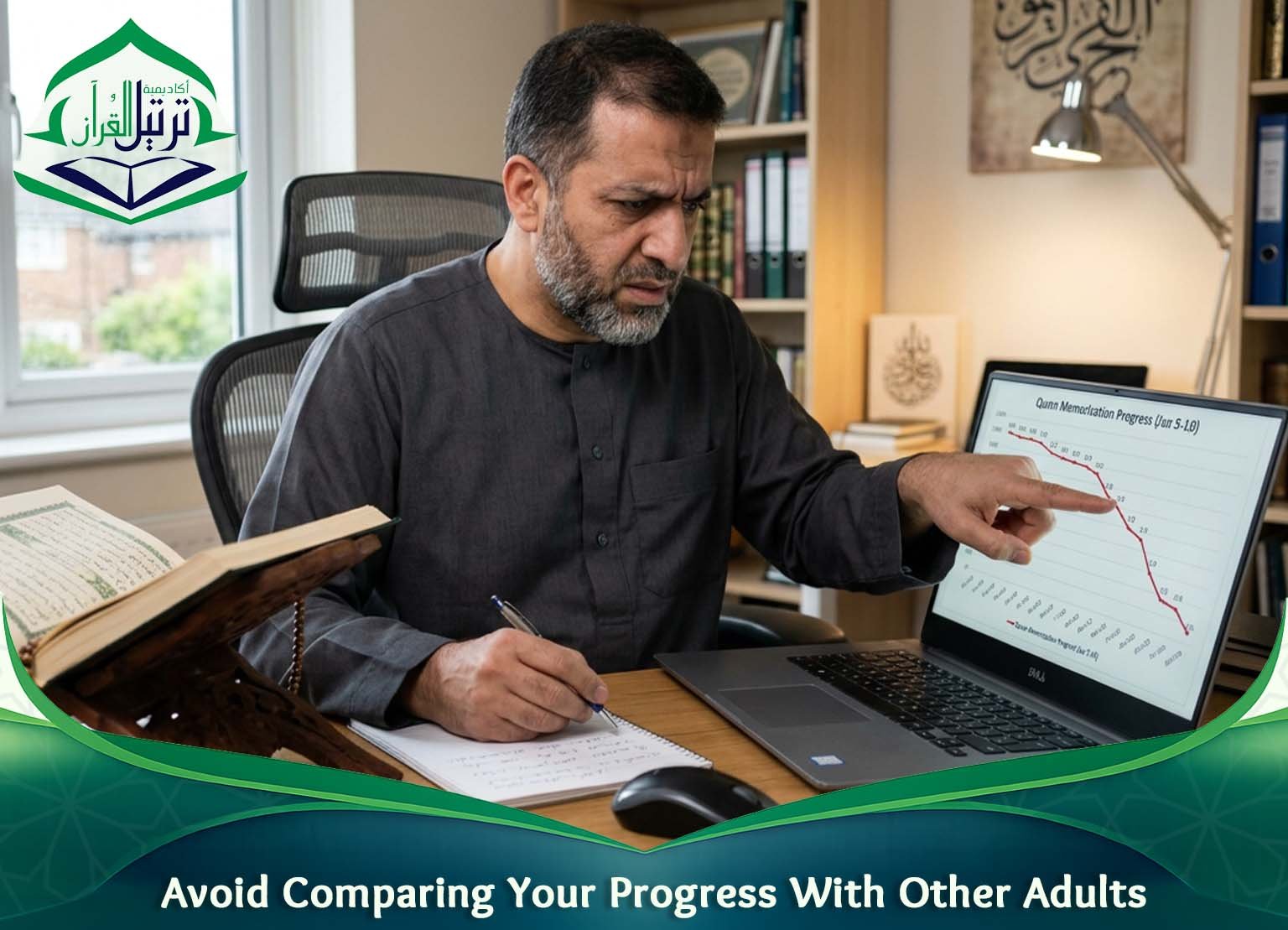
- Comparing Your Progress With Others
- Every learner has different circumstances. Comparing yourself with someone following a full-time Hifz schedule can create unnecessary pressure.
The better question is whether your current routine is helping you make steady, sustainable progress.
Create a Realistic Quran Memorization Schedule
Before choosing a completion date, evaluate your weekly routine. Write down:
- Your available study hours.
- Your current reading level.
- Your Tajweed ability.
- Your work or school commitments.
- Your preferred lesson times.
- Your weekly rest periods.
- The amount of revision you can realistically complete.
Then select a daily memorization target.
For example, a learner with limited time may choose half a page per day. Another person with more availability may choose one page. The target can be increased later if retention remains strong.
The schedule should also include a weekly review session. This prevents new memorization from continuously taking priority over older portions.
How Can Tarteel Online Quran Academy Support Your Hifz Journey?
A structured learning environment can help learners turn a general goal into a practical routine.
With Tarteel Online Quran Academy, learners can approach Quran memorization as an organized learning process rather than simply trying to memorize pages independently.
A structured Hifz experience can include areas such as:
- Regular Quran lessons.
- Personalized memorization goals.
- Teacher feedback.
- Recitation correction.
- Revision planning.
- Flexible online learning.
- Progress monitoring.
- Support for different learner levels.
The appropriate pace still depends on the individual student. An academy should not replace personal consistency; instead, it can provide guidance and accountability around the learner’s own routine.
Before joining any Quran memorization program, learners and parents should ask about lesson structure, teacher qualifications, revision methods, scheduling, assessment, and how the program adapts when a student needs a slower or faster pace.
What Should You Look for in an Online Quran Memorization Program?
The advertised completion period should not be the only factor considered when comparing programs. Look for a learning structure that answers practical questions such as:
- Is There Regular Recitation Correction?
- Memorization should be checked by someone who can identify pronunciation and Tajweed problems.
- Is Revision Part of the Program?
- A good Hifz plan needs a clear strategy for protecting older memorization.
- Can the Schedule Fit Your Life?
- A schedule that conflicts with work, school, or family commitments may become difficult to maintain.
- Is Progress Monitored?
- Regular assessments can show whether the student is actually retaining previous material rather than simply adding new pages.
- Can the Pace Be Adjusted?
- A student’s circumstances can change. A flexible program should allow adjustments when necessary.
These points can help learners evaluate an online academy based on the learning process rather than a headline completion time.
Stay Consistent During a Long Hifz Journey
Consistency becomes easier when Quran memorization is connected to existing daily habits.
For example, you can study after Fajr, before work, after returning home, or at another time when your concentration is usually strongest.
It is also useful to keep the daily goal visible. Instead of thinking about memorizing 604 pages, focus on today’s passage.
When a difficult day happens, reduce the new material if necessary, but try to maintain some revision. Protecting the habit can be more valuable than forcing an unrealistic target.
Another helpful practice is to track your progress. Record the Surah, page, revision status, and areas that need additional attention.
Over several months, this record can make your progress visible and provide motivation during slower periods.
Is Speed More Important Than Retention?
No single completion speed can define successful Hifz. A learner may finish quickly but struggle to recall earlier portions. Another may take several years and maintain strong memorization because revision was integrated throughout the process.
The better goal is therefore strong and sustainable memorization. If your schedule allows only half a page per day, there is no reason to abandon the journey because someone else memorizes two pages.
Likewise, if you have enough time for an intensive schedule, you should still protect time for revision.
The ideal pace is the one that allows you to continue progressing while maintaining accurate recitation and reliable recall.
How to Estimate Your Personal Quran Memorization Timeline
You can create a rough estimate by starting with how many pages you expect to memorize each day. For example:
604 pages ÷ 1 page per day = approximately 604 memorization days.
However, this is not the final calendar timeline because you will need revision days, breaks, assessments, and periods when your daily target changes. A more realistic plan therefore includes a buffer.
If you estimate that your daily average will be one page, you should not automatically set a completion date exactly 604 days away. Instead, allow additional time for revision and unexpected interruptions.
The same principle applies to half-page and two-page schedules. This approach creates a more realistic expectation and reduces pressure when life does not follow the original timetable.
A Practical Weekly Hifz Routine
A simple weekly structure can help learners maintain balance between new memorization, regular revision, and their everyday responsibilities, making it easier to stay consistent without feeling overwhelmed by the amount of Quran they still need to memorize.
- Sunday to Thursday:
Focus primarily on new memorization combined with daily revision. - Friday:
Reduce or pause new memorization and dedicate more time to reviewing the week’s material. - Saturday:
Test older portions and prepare for the next week’s target.
The exact days can be changed according to your schedule. What matters is having a recurring review period rather than constantly pushing forward.
If a student notices that previously memorized passages are becoming weak, the next week’s new target can be reduced temporarily.
That adjustment is not a failure. It is part of responsible memorization planning.
The Spiritual Side of Memorizing the Quran

Hifz is not simply a productivity project with a completion date. For Muslims, memorizing the Quran is connected to worship, recitation, reflection, and maintaining a relationship with Allah’s Book. Therefore, the journey should include sincerity and patience alongside planning.
A learner may have weeks of rapid progress and other weeks when memorization feels difficult. Such fluctuations are normal in a long-term learning journey.
Instead of focusing exclusively on how many pages remain, try to value the daily connection with the Quran.
This mindset can make the process more sustainable and reduce the pressure associated with completing a specific number of pages within an exact period.
Frequently Asked Questions About Quran Memorization
Address common concerns about memorization time, effective study habits, maintaining motivation, and overcoming challenges during the Hifz journey.
What should I do if I keep confusing similar Quranic verses?
Create a separate list of similar passages and review them together. Mark the words or phrases that differ, then ask your teacher to test those sections specifically. This targeted practice can make the differences easier to recognize during independent recitation.
Should I memorize the Quran in Surah order?
There is no universal requirement that every learner must follow one identical memorization sequence. A teacher may recommend a particular order based on the student’s level, goals, and learning plan. Discussing the sequence with a qualified instructor can help you choose a practical starting point.
How can I stay motivated after the initial excitement disappears?
Connect your memorization routine to a fixed daily habit and track small milestones. It can also help to vary your review activities, recite previously memorized passages in Salah, and discuss difficult periods with your teacher instead of abandoning the routine.
What should I do when I reach a memorization plateau?
First, check whether the problem comes from insufficient sleep, an unrealistic daily target, weak revision, pronunciation difficulties, or an inconsistent schedule. Then reduce the new material temporarily and focus on strengthening previous portions. A teacher can also help identify the specific reason your progress has slowed.
In conclusion, How Long Does It Take to Memorize the Quran does not have one fixed answer because every learner has different abilities, responsibilities, and available study time. Some students may follow an intensive Hifz plan and complete their memorization relatively quickly, while others may need several years because of work, school, family commitments, or other responsibilities.
A successful Quran memorization journey requires more than simply learning new pages. Regular revision, accurate Tajweed, consistent practice, teacher feedback, and a realistic schedule all contribute to strong and lasting memorization. Therefore, instead of focusing only on completing the Quran as quickly as possible, learners should choose a pace they can maintain over the long term.
With structured guidance from Tarteel Online Quran Academy, students can build a memorization routine that suits their level, schedule, and personal goals. Even a small amount of progress each day can become significant when it is supported by consistency, patience, and regular revision.
Ultimately, How Long Does It Take to memorize the Quran depends on the individual learner and the approach they follow. Set a realistic target, remain consistent, review what you have memorized, and allow yourself enough time to strengthen your recall. The goal is not simply to reach the final page quickly, but to develop a lasting connection with the Quran and preserve what you have worked hard to memorize.