Islamic manners course for kids is one of the best ways to help children build a strong Islamic personality rooted in faith, kindness, honesty, and respect. Parents today are not only looking for Quran education but also searching for practical ways to teach their children Islamic values that shape their daily behavior. A well-designed Islamic manners course for kids introduces children to the beautiful etiquette of Islam through simple lessons, engaging activities, authentic Islamic teachings, and real-life examples that they can practice every day.
At Tarteel Online Quran Academy, children learn that good manners are an essential part of worship. Islam does not separate faith from behavior. Every smile, kind word, respectful greeting, and honest action can become an act of worship when performed sincerely for the sake of Allah. This approach helps children understand that Islamic manners are not just rules to memorize but habits that bring them closer to Allah and strengthen their relationships with family, friends, teachers, and the wider community.
In this comprehensive guide, you will discover why Islamic manners are essential for every Muslim child, the most important manners every young Muslim should practice, effective strategies for parents, and how structured learning can help children develop noble character that remains with them throughout their lives.
Why Every Child Needs an Islamic Manners Course for Kids?
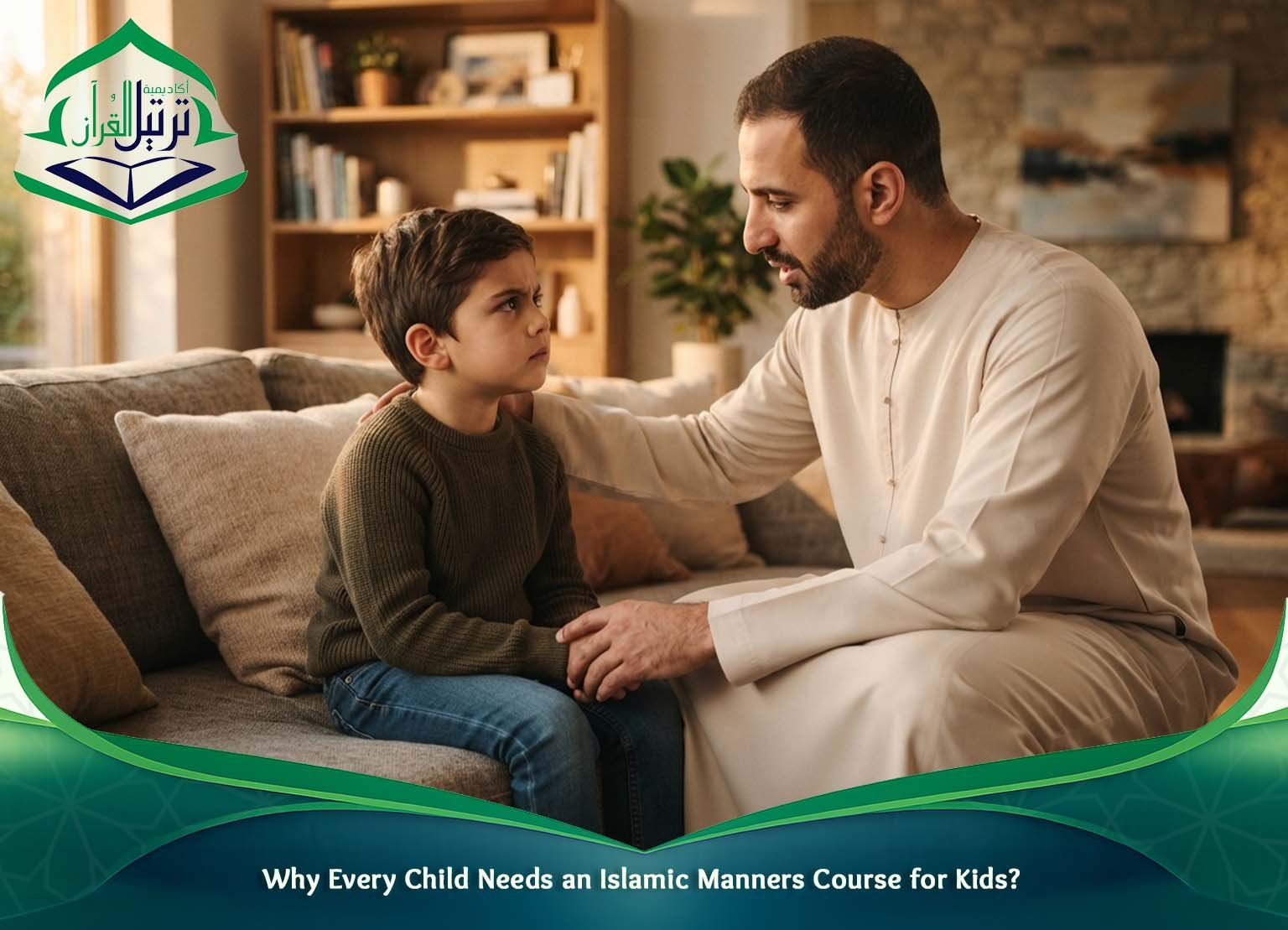
Children begin developing habits from a very young age. Throughout childhood, the values they learn often remain with them into adulthood. Therefore, parents should never underestimate the importance of teaching Islamic etiquette early.
A high-quality Islamic manners course for kids does much more than teach children to say “please” and “thank you.” It helps them understand why Muslims should behave respectfully, honestly, patiently, and compassionately in every situation.
Islam teaches that good character is among the greatest qualities a believer can possess. Prophet Muhammad ﷺ was sent to perfect noble manners, making character development one of the primary goals of Islamic education.
When children consistently practice Islamic etiquette, they naturally become more confident, respectful, responsible, and emotionally mature.
Start Your Islamic Learning Journey Today
Join Tarteel Online Quran Academy today and begin a meaningful Islamic learning experience designed for children, adults, and beginners worldwide. Our qualified Quran teachers provide interactive lessons, flexible schedules, and personalized guidance to help students improve their Quran recitation, understand Islamic teachings, and strengthen their connection with Allah.
Through structured online classes, learners can study comfortably from home while receiving professional support at every step. Start your journey today and build a strong spiritual foundation with trusted Quran education.
Benefits of an Islamic Manners Course for Kids
Teaching children proper Islamic manners during their early years provides lifelong benefits that extend far beyond childhood. Some of these benefits include:
- Building a strong Islamic identity.
- Increasing love for Allah and His Messenger ﷺ.
- Developing respect for parents and elders.
- Improving communication skills.
- Strengthening friendships.
- Encouraging honesty in daily life.
- Reducing conflicts with siblings.
- Improving classroom behavior.
- Creating responsible future adults.
- Building confidence through positive behavior.
Children who understand Islamic etiquette often become positive role models for their classmates and siblings because they naturally demonstrate kindness and patience in different situations.
Islamic Manners Course for Kids Builds Strong Faith
One of the greatest advantages of an Islamic manners course for kids is that children begin connecting every action with pleasing Allah. Instead of behaving well simply because adults tell them to, they understand the spiritual purpose behind each action. For example, children learn that:
- Smiling is Sunnah.
- Greeting others spreads peace.
- Helping parents earns rewards.
- Honesty pleases Allah.
- Kind speech is an act of worship.
- Patience brings great rewards.
- Forgiveness strengthens the heart.
This understanding transforms ordinary daily habits into meaningful acts of worship.
How Parents Support an Islamic Manners Course for Kids?
Parents are the first teachers every child knows.No curriculum, teacher, or online quran tutor for kids class can replace the influence of parents who consistently demonstrate excellent character at home.
Children imitate what they observe much more than what they hear. Children imitate what they observe much more than what they hear. Parents who speak kindly inspire their children to learn quran for kids online with respect, compassion, and good manners.
A sincere apology after making a mistake teaches humility, while patient behavior during difficult moments helps children develop strong emotional control. For this reason, every lesson learned during an online Islamic center for kids manners course for kids should continue at home through consistent daily practice.
Islamic Manners Course for Kids Starts with Parents’ Example
Children pay close attention to daily routines. Simple actions such as saying:
- Bismillah before eating.
- Alhamdulillah after finishing food.
- Assalamu Alaikum when entering the house.
- JazakAllahu Khair after receiving help.
Teach valuable Islamic habits without formal lessons. Parents who consistently practice these behaviors create an environment where Islamic etiquette becomes natural.
How to Encourage Children During an Islamic Manners Course for Kids?
Positive encouragement is usually more effective than harsh correction. Instead of focusing only on mistakes, celebrate progress. For example:
“MashaAllah, you remembered to greet your grandparents first.”
“I’m proud that you shared your toys today.”
Positive reinforcement motivates children to repeat good behavior willingly.
Tarteel Online Quran Academy Helps Parents Continue Learning at Home
Learning becomes much easier when parents and teachers work together. At Tarteel Online Quran Academy, lessons are designed to be practical, allowing children to immediately apply what they learn with their families. Parents can reinforce classroom lessons through daily reminders, discussions, and simple activities that make Islamic manners part of everyday life rather than occasional lessons.
15 Lessons in an Islamic Manners Course for Kids
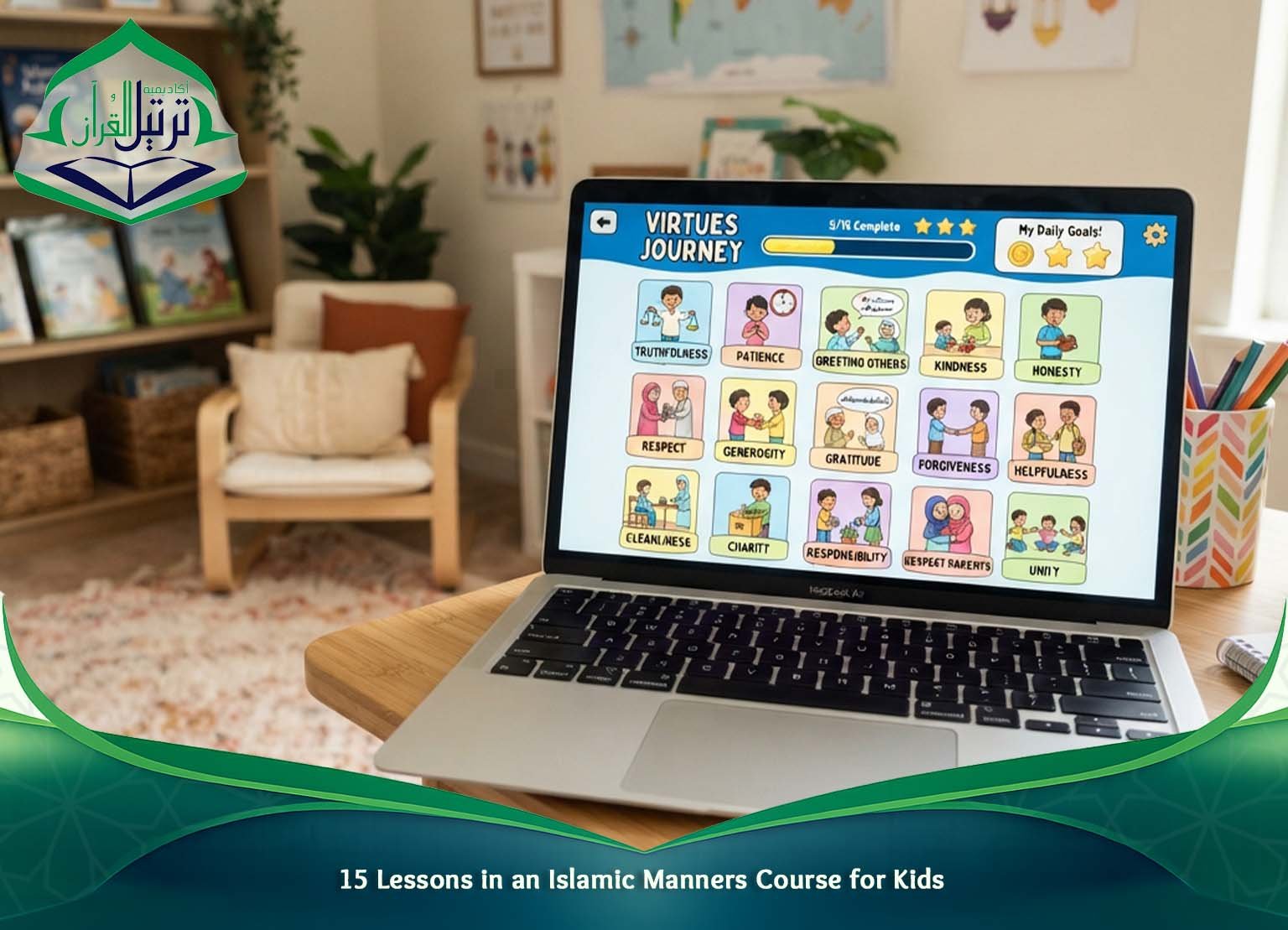
Every Muslim child should gradually develop habits that reflect the teachings of the Quran and the Sunnah. Moreover, these beautiful manners help children grow into compassionate, responsible, trustworthy, and respectful individuals who positively influence their families, schools, and communities throughout their lives.
1. Islamic Manners Course for Kids: Begin Every Action with Bismillah
Teaching children to begin every beneficial activity by saying “Bismillah” reminds them that Allah should always come first in every aspect of life. Furthermore, this simple habit strengthens faith and encourages mindfulness before starting any important task. They can practice this before:
- Eating.
- Drinking.
- Studying.
- Leaving home.
- Starting homework.
- Playing games.
As a result, this simple phrase strengthens mindfulness, increases gratitude, and reminds children that every blessing comes from Allah throughout the day.
2. Greeting Others with Assalamu Alaikum
The Islamic greeting spreads peace, love, and brotherhood among Muslims. Additionally, teaching children to greet others sincerely strengthens social relationships and reflects the beautiful values encouraged by Islam.
- Parents.
- Siblings.
- Friends.
- Teachers.
- Relatives.
- Neighbors.
Likewise, they should understand the importance of responding with an even better greeting whenever possible because this increases love, respect, and unity within the community.
3. Respecting Parents
Respect for parents is among the greatest obligations in Islam. Therefore, children should understand from an early age that honoring their parents is a form of worship rewarded by Allah. Young Muslims should learn to:
- Listen carefully.
- Avoid raising their voices.
- Respond politely.
- Help with household responsibilities.
- Make dua for their parents.
Consequently, these acts of respect strengthen family relationships, increase gratitude, and help children develop humility, patience, and responsibility in their daily lives.
4. Speaking Truthfully
Honesty builds trust between people and strengthens a child’s character. Moreover, children should understand that Muslims remain truthful even when telling the truth feels difficult because Allah loves those who are honest. Therefore, parents should explain that honesty brings peace of mind, while lying usually creates greater problems and weakens trust over time.
5. Showing Kindness to Everyone
Kindness is one of the easiest ways for children to earn rewards from Allah. Instead, it should extend beyond family members to classmates, neighbors, teachers, guests, younger children, and even animals. A child should understand that every act of kindness matters. For example, sharing school supplies, comforting a sad friend, or helping someone carry a heavy bag all reflect excellent Islamic character.
Furthermore, parents can explain that kindness creates stronger friendships, encourages cooperation, and helps others feel respected, valued, and emotionally safe. Over time, these small habits naturally become part of a child’s personality.
6. Islamic Manners Course for Kids Teaches Gratitude
Gratitude is a quality that brings happiness and contentment. Therefore, children should learn to thank Allah for every blessing, whether it is large or small, because grateful hearts become more patient and optimistic.
- After eating, children say Alhamdulillah to thank Allah for His blessings.
- Following recovery from an illness, they express gratitude by saying Alhamdulillah.
- When receiving a gift, they remember to say Alhamdulillah with appreciation.
- After completing a task, they thank Allah by saying Alhamdulillah for helping them succeed.
Likewise, children should thank people who help them. Saying “JazakAllahu Khairan” teaches appreciation while reminding them that every good deed deserves recognition. Consequently, gratitude helps children become more positive and less likely to complain.
7. Respecting Privacy
Islam teaches respect for personal space and the rights of others. For this reason, children should gradually develop habits that protect privacy and demonstrate respect in every environment. They should practice:
- Knocking before entering a room.
- Waiting for permission.
- Respecting closed doors.
- Avoiding looking through other people’s belongings.
Although these habits may seem simple, they teach responsibility, trustworthiness, and consideration while helping children understand healthy personal boundaries.
8. Eating with Good Etiquette
Meal times provide excellent opportunities to teach Islamic studies for kids manners in practical ways. Additionally, parents can transform everyday meals into valuable learning experiences by practicing the Sunnah together.
- Wash their hands before eating.
- Say Bismillah.
- Eat with the right hand.
- Avoid wasting food.
- Eat calmly.
- Thank Allah after finishing.
Furthermore, parents should consistently model these behaviors because children naturally imitate actions more quickly than they follow verbal instructions alone.
Islamic Manners Course for Kids Encourages Respect for Teachers
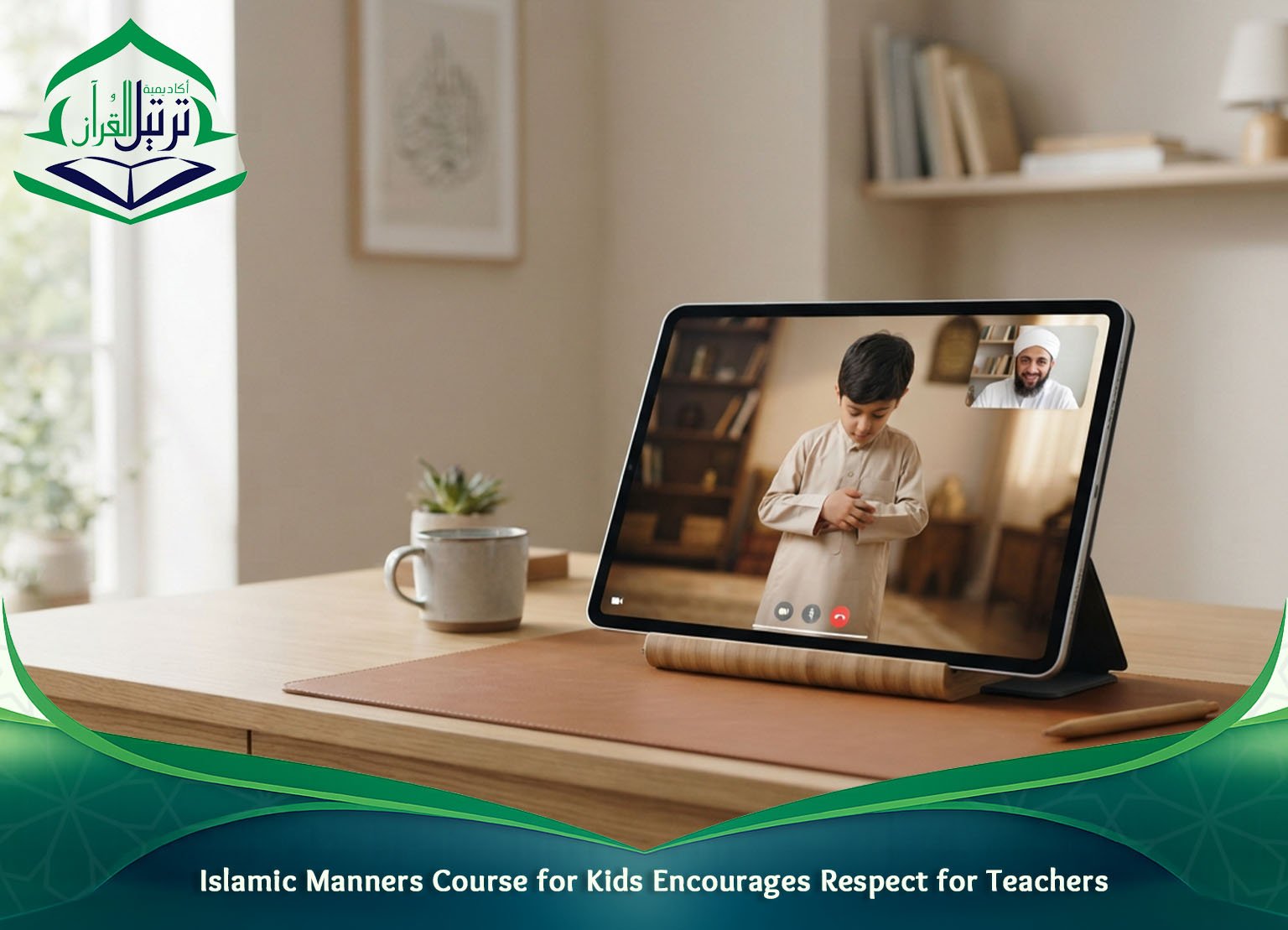
Teachers dedicate their time to helping children learn valuable knowledge. Therefore, Islam encourages students to show respect, gratitude, patience, and good behavior toward everyone who teaches them.
- Listening carefully during lessons.
- Waiting for their turn to speak.
- Completing assignments honestly.
- Asking questions politely.
- Appreciating their teachers’ efforts.
Moreover, at Tarteel Online Quran Academy, respect between teachers and students creates a welcoming learning environment where children feel confident asking questions and improving their understanding of Islam.
9. Speaking Politely
Words have great power because kind speech can brighten someone’s day while hurtful words may leave lasting emotional effects. Therefore, children should develop the habit of speaking gently and respectfully in every situation. Parents can encourage expressions such as:
- Please.
- Thank you.
- Excuse me.
- May I help you?
- JazakAllahu Khairan.
Additionally, children should avoid shouting, mocking others, interrupting conversations, or using offensive language because respectful speech reflects true Islamic manners.
10. Being Honest at All Times
Honesty is one of the most respected qualities in Islam. Furthermore, children should know that telling the truth strengthens relationships and builds trust between family members, teachers, and friends. Instead of punishing every mistake harshly, parents should praise honesty whenever children admit the truth. Consequently, children become more confident and willing to remain truthful in the future.
11. Caring for Others
Islam encourages believers to care about the well-being of everyone around them. Therefore, children should regularly practice compassion through simple acts of kindness that benefit others. Children can show compassion by:
- Visiting a sick relative.
- Helping younger siblings.
- Sharing toys.
- Including lonely classmates during play.
- Offering assistance without being asked.
As a result, these actions help children develop empathy, generosity, and a sincere concern for the happiness and well-being of others.
Daily Habits That Strengthen Islamic Character
Learning manners during lessons is important. However, practicing them consistently every day is what truly shapes a child’s character and transforms good advice into lifelong habits. Therefore, parents should establish simple daily routines that naturally reinforce Islamic values at home. For example:
- Morning routines may include saying morning adhkar together.
- Before school, children can make dua for success.
- During meals, everyone can practice Sunnah eating etiquette.
- In the evening, families can discuss one good deed completed during the day.
As a result, Islamic manners become a natural part of family life rather than isolated lessons that children remember only during class time.
12. Keeping Promises
Children often make promises without fully understanding how important they are in Islam. Therefore, parents should explain that keeping promises is one of the qualities of a trustworthy Muslim and strengthens relationships with others. This includes:
- Finishing homework.
- Returning borrowed items.
- Completing household responsibilities.
- Arriving on time.
Furthermore, fulfilling promises teaches responsibility, builds reliability, and encourages children to become dependable individuals whom others can trust with confidence.
13. Apologizing After Mistakes
Every child makes mistakes while learning and growing. However, admitting those mistakes sincerely demonstrates maturity, honesty, and a willingness to improve, all of which are qualities encouraged in Islam.
- Say “I’m sorry.”
- Correct their mistakes.
- Avoid making excuses.
- Forgive others who apologize.
Likewise, parents should apologize whenever appropriate because children learn humility and accountability more effectively through positive examples than through words alone.
14. Taking Care of Cleanliness
Cleanliness is an important part of Islamic life and reflects a Muslim’s respect for both personal health and the people around them. Therefore, children should develop healthy hygiene habits from an early age.
- Washing hands regularly.
- Brushing their teeth.
- Wearing clean clothes.
- Organizing their bedrooms.
- Keeping classrooms tidy.
Moreover, these daily habits improve physical health, strengthen self-discipline, and help children appreciate the importance of order, responsibility, and personal care.
15. Islamic Manners Course for Kids Helps Build Humility
Humility protects children from arrogance and selfishness while encouraging them to appreciate others with kindness and respect. Therefore, children should understand that every blessing and every success ultimately comes from Allah.
They should also learn that every person deserves kindness regardless of wealth, appearance, nationality, or background. Instead of showing off their achievements, children should express gratitude to Allah and encourage others to succeed as well. Consequently, humility helps them become confident, respectful, and well-liked members of their communities.
Why Consistency Matters More Than Perfection?
Many parents worry when children forget certain manners or occasionally make mistakes. Fortunately, learning good character is a gradual journey that requires patience, encouragement, and continuous practice rather than immediate perfection.
Rather than expecting children to master every Islamic manner overnight, parents should focus on steady improvement by introducing one habit at a time. For example, one week may focus on greeting others, while the following week emphasizes honesty or gratitude. Over time, these repeated practices become natural habits that children continue throughout adolescence and adulthood without feeling pressured or forced.
How Tarteel Online Quran Academy Supports Character Development?
A strong Islamic education combines knowledge with practical application. For this reason, Tarteel Online Quran Academy focuses on helping children understand the wisdom behind every Islamic manner instead of simply memorizing rules without understanding their purpose.
Lessons include meaningful discussions, practical examples, role-playing activities, and age-appropriate explanations that make learning enjoyable and engaging. Furthermore, children are encouraged to apply these manners immediately at home, in school, and within their communities so that good character becomes part of their everyday lives.
Additionally, teachers communicate with parents whenever possible to ensure that important Islamic manners continue to be reinforced outside the classroom. As a result, children receive consistent guidance from both their teachers and families, allowing them to build strong Islamic character based on knowledge, practice, and sincere faith.