
Wudu after ghusl is a common question among Muslims who want to understand whether ritual bathing is sufficient for prayer or whether they must perform ablution separately. In many situations, a properly performed ghusl can also suffice for wudu, provided the relevant conditions are fulfilled and no act that invalidates purification occurs afterward.
However, the answer depends partly on the type of ghusl, the method used to perform it, and the Islamic school of jurisprudence a person follows. Therefore, understanding the relationship between ghusl and wudu helps Muslims avoid unnecessary repetition while observing the requirements of purification correctly.
This guide explains the difference between ghusl and wudu, the correct method of ritual bathing, and the circumstances in which another ablution may be necessary. It also covers common mistakes, practical situations, and frequently asked questions to help readers approach daily worship with greater confidence.
What Is Ghusl in Islam and How Does It Relate to Wudu?
Ghusl is the Islamic ritual bath that involves washing the entire body according to the requirements of purification. Muslims perform it when major ritual impurity occurs or when a particular religious occasion calls for a recommended bath.
Unlike ordinary bathing, ghusl has a religious purpose. It restores the state of ritual purity required for acts of worship that cannot be performed while a person remains in major impurity.
When Is Ghusl Required?
Ghusl becomes obligatory in specific circumstances established in Islamic jurisprudence. These include:
- Janabah: After sexual intercourse or ejaculation that establishes the requirement for ritual bathing.
- Menstruation: After menstrual bleeding ends.
- Postpartum bleeding: After bleeding following childbirth ends, according to the applicable rulings.
- Other relevant circumstances: Certain additional situations may require ghusl depending on the circumstances and the scholarly interpretation followed.
Ghusl is also recommended on particular occasions, such as Friday prayer, according to established teachings. However, a recommended bath does not necessarily carry the same rulings as an obligatory bath in every school of jurisprudence.
Understanding this distinction is useful because the purpose and legal status of a bath can affect the discussion about whether it replaces wudu.
Start Your Islamic Learning Journey Today
Join Tarteel Online Quran Academy today and begin a meaningful Islamic learning experience designed for children, adults, and beginners worldwide. Our qualified Quran teachers provide interactive lessons, flexible schedules, and personalized guidance to help students improve their Quran recitation, understand Islamic teachings, and strengthen their connection with Allah.
Through structured online classes, learners can study comfortably from home while receiving professional support at every step. Start your journey today and build a strong spiritual foundation with trusted Quran education.

What Is the Difference Between Ghusl and Wudu?
Although both practices relate to ritual purification, they serve different purposes and involve different requirements. Wudu is the prescribed ablution performed before prayer and certain other acts of worship. It includes washing the face and arms, wiping the head, and washing the feet, along with the associated requirements established by Islamic law. Ghusl, by contrast, involves washing the entire body. It addresses major ritual impurity, whereas wudu addresses minor ritual impurity. The main differences are summarized below.
| Feature | Wudu | Ghusl |
|---|---|---|
| Main purpose | Removing minor ritual impurity | Removing major ritual impurity |
| Washing requirements | Specific body parts | The entire body, according to the applicable rulings |
| Typical circumstances | Before prayer when purification is required | After janabah or when menstruation ends |
| Relationship | May be included in the recommended ghusl method | May also suffice for wudu under the relevant conditions |
Consequently, performing wudu alone does not replace an obligatory ghusl after janabah. Conversely, a valid ghusl may remove the need for a separate ablution, depending on the applicable legal conditions.
Does Ghusl Count as Wudu?
Yes, a properly performed ghusl can suffice for wudu according to many scholars, provided the necessary conditions are met and nothing subsequently invalidates the person’s purification.
Nevertheless, the details require attention. Scholars differ on certain requirements, including the role of intention, rinsing the mouth and nose, and whether particular types of recommended bathing replace wudu.
For example, a person performing ghusl to remove janabah generally follows a different legal discussion from someone taking an ordinary shower for cleanliness. The latter should not automatically assume that bathing has replaced the ablution required for prayer.
When Is Wudu After Ghusl Unnecessary?
A separate ablution is generally unnecessary when the ghusl itself fulfills the requirements for both major and minor purification under the ruling being followed. Consider the following example:
A Muslim performs the required ghusl after janabah, washes the entire body thoroughly, and completes the purification correctly. If no subsequent event invalidates wudu, another ablution may not be necessary before prayer. However, because some details differ between schools of jurisprudence, following a trusted scholar’s guidance is advisable when uncertainty remains.
When Might Another Wudu Be Required?
A separate ablution may be necessary when the bath does not fulfill the requirements for replacing wudu according to the person’s school of jurisprudence. For instance, someone who takes an ordinary shower without intending the required ritual purification should not assume that the shower automatically fulfills every obligation.
Similarly, if a person performs ghusl and subsequently passes urine, passes wind, or experiences another recognized invalidator of wudu, a new ablution is generally required before prayer. The important distinction is between completing the bath itself and preserving the state of purification afterward.
How to Perform Wudu After Ghusl
In many cases, the simplest approach is to perform the recommended ablution as part of ghusl rather than treating it as a completely separate ritual afterward. The following method explains how to complete the purification process carefully. Specific obligatory details should be understood according to the Islamic school being followed.
Step 1: Set Your Intention for Ghusl and Wudu
Before beginning, intend in your heart to perform ghusl for the required religious purification. The intention does not need to be spoken aloud. Rather, it is the conscious purpose behind the act of worship.
For obligatory ghusl, the legal status of intention differs among the schools of jurisprudence. Therefore, Muslims should follow the requirements applicable to their school rather than assuming that every school treats intention identically.
Step 2: Wash Your Hands and Remove Impurities Before Ghusl
Begin by washing your hands. Then clean the private parts and remove any physical impurity from the body. This preparation helps ensure that the ritual bath is performed properly. Physical cleanliness and ritual purity are related, but they are not identical concepts. If an impurity is present on the body, remove it before proceeding with the remaining steps.
Step 3: Perform Wudu During Ghusl
- Washing the face.
- Washing both arms, including the elbows.
- Wiping the head.
- Washing both feet, according to the prescribed method.
Rinsing the mouth and nose is also included in the recommended method of ghusl and is obligatory in some schools.
Some descriptions of the Prophetic method place washing the feet at the end when the bathing area requires it. This detail does not mean that every person must delay washing the feet in every situation.
Step 4: Wash Your Head and Hair During Ghusl
Pour water over the head and ensure that it reaches the scalp and hair roots. Pay attention to areas where water might not reach easily. Thick hair, tightly arranged styles, and accumulated products can sometimes make complete washing more difficult.
Women do not necessarily have to undo braided hair for every ghusl. The relevant requirement is that water reaches the areas that must be washed. However, specific rulings concerning braids and hair after menstruation or postpartum bleeding should be checked with a qualified scholar.
Step 5: Wash Your Entire Body During Ghusl
Wash the entire body, ensuring that water reaches the required areas of the skin. It is helpful to begin with the right side and then wash the left side, following the recommended method. Nevertheless, the legal significance of the sequence depends on the school of jurisprudence. Pay particular attention to areas that are easily overlooked, including:
- Under the arms.
- Behind the ears.
- The navel.
- Skin folds.
- Between the fingers and toes.
- Areas beneath jewelry that prevents water from reaching the skin.
The aim is to ensure complete coverage, not to repeat every action unnecessarily.
Step 6: Confirm Your Ghusl Is Complete Before Prayer
Once the required washing has been completed, check that no necessary area has been left dry. At this stage, the question of whether another ablution is needed depends on the type of ghusl, the relevant legal requirements, and whether anything has invalidated wudu.
If the bath fulfills the conditions for both forms of purification, repeating the entire ablution may be unnecessary.
What Are the Obligatory Acts of Ghusl?
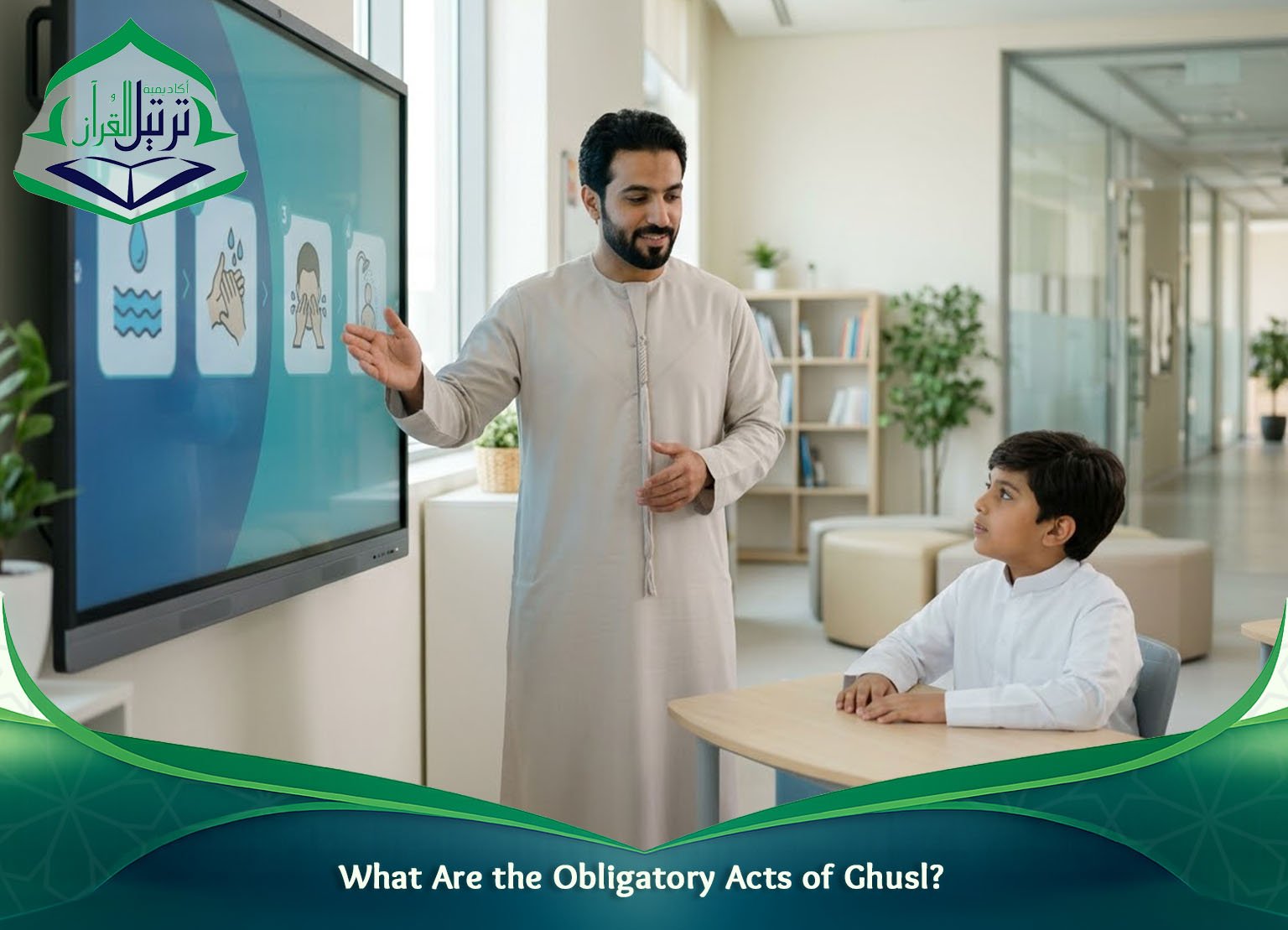
Islamic schools of jurisprudence differ on some obligatory acts of ghusl. Understanding these differences helps Muslims follow the correct purification method according to their school. For readers who want to learn Islam step by step, understanding the foundations of ritual purity can clarify how daily worship requirements connect. Scholars discuss several essential elements:
- Intention: The Shafi’i, Maliki, and Hanbali schools require intention for obligatory ghusl, while the Hanafi school does not make it a condition of validity.
- Washing the entire body: Water must reach every area that Islamic law requires a person to wash. Leaving a required area dry can invalidate ghusl.
- Rinsing the mouth and nose: The Hanafi school requires both actions, while other schools apply different rulings.
- Removing physical impurities: Clean any physical impurity from the body before completing the purification process.
These differences explain why Muslims should avoid treating one checklist as universal across all schools. If you are unsure whether your ghusl meets the requirements, consult a qualified scholar who understands your school’s rulings.
Which Sunnah Practices Should You Follow During Ghusl?
Muslims can follow the Prophetic method of ghusl to observe recommended purification practices. This method includes washing the hands, cleaning the private parts, performing wudu, and washing the head before completing the bath. Follow these practical steps:
- Wash your hands before handling other parts of the body.
- Remove physical impurities before proceeding.
- Perform wudu during the bathing process.
- Wash your head and ensure water reaches your scalp.
- Clean every required area of your body.
- Dry yourself with a towel if you wish.
You can also perform ghusl while sitting or standing. Choose a comfortable position that allows you to wash the entire body properly. For a clearer explanation of the ablution sequence, see this guide to wudu step by step.
These practices help Muslims follow the recommended method without creating unnecessary hardship or repeating the same actions because of unfounded doubts.
Can You Pray After Ghusl Without Wudu?
Yes, you can pray after a valid ghusl without performing another wudu when the bath fulfills the applicable requirements and no subsequent event invalidates your purification. For example, a Muslim who completes the obligatory ghusl after janabah may proceed to prayer without repeating wudu under the relevant ruling.
However, prayer also requires observing its prescribed time. You can review the guide to Fajr Salah to learn more about the dawn prayer. However, consider these three situations:
- Obligatory ghusl: A valid bath to remove major ritual impurity can also fulfill the requirements for wudu under the applicable conditions.
- Ordinary bathing: A shower for physical cleanliness does not automatically fulfill every requirement of ritual purification.
- An event after ghusl: If you pass urine, pass wind, or experience another recognized invalidator of wudu, you generally need to renew your ablution before prayer.
Understanding these distinctions prevents two common mistakes. You should not assume that every shower replaces wudu, nor should you assume that every valid ghusl always requires another ablution.
What Happens If You Forget Wudu During Ghusl?
Forgetting to perform a separate wudu during ghusl does not automatically invalidate the bath. Instead, consider whether you completed the required acts of purification. If your ghusl fulfills the relevant conditions for both major and minor purification, you may not need another ablution.
However, the ruling changes if you omit an obligatory element. The correct response depends on the missing action and the school of jurisprudence you follow. For example, Islamic schools differ on whether rinsing the mouth and nose constitutes an obligatory part of ghusl. Therefore, you should not assume that every omission carries the same ruling for all Muslims.
If you discover a specific mistake, ask a qualified scholar how to correct it. Avoid repeating the entire bath simply because you feel uncertain without a clear reason. Muslims who want to understand the evening prayer can also read this guide to Isha prayer.
Can You Perform Ghusl in a Bathtub or Standing Water?
Yes, you can perform ghusl in a bathtub or another suitable bathing arrangement if you fulfill the required purification conditions.
Your position does not determine the validity of ghusl. Instead, ensure that the water remains suitable for purification and reaches every area that Islamic law requires you to wash. Keep these points in mind:
- Use water suitable for ritual purification.
- Remove physical impurities from your body.
- Wash every required area thoroughly.
- Prevent contamination from compromising the water’s purity.
- Follow your school’s rulings concerning water quantity and use.
A bathtub does not automatically invalidate ghusl, and you do not always need running water. The water’s condition and the applicable Islamic rulings determine whether your method fulfills the requirements. During Ramadan, Muslims should also distinguish ritual purification from the separate rules governing fasting. Read more about Ramadan fasting rules for guidance on that topic.
What Invalidates Wudu After Ghusl?

Completing ghusl does not guarantee that your state of purification will remain unchanged. Certain events can invalidate wudu after the bath. Common examples include:
- Passing urine or stool.
- Passing wind.
- Experiencing sleep that invalidates wudu under the applicable ruling.
- Other recognized invalidators according to your school of jurisprudence.
If one of these events occurs after ghusl, you generally need to renew wudu before prayer.
However, a physical sensation or an unsupported doubt does not automatically invalidate purification. For instance, if you wonder whether you passed wind but have no certainty, do not treat that doubt alone as proof that your wudu has ended.
Distinguish between a confirmed event and a suspicion. This approach helps you avoid unnecessary repetition and maintain a more manageable worship routine.
Common Mistakes to Avoid When Performing Ghusl
Misunderstandings about purification can lead Muslims to repeat valid rituals or overlook necessary actions. Avoid these common mistakes:
- Assuming every shower counts as ghusl: An ordinary shower does not automatically fulfill the requirements of obligatory ritual purification.
- Believing that every ghusl requires another wudu: A valid ghusl can replace ablution when the applicable conditions allow it.
- Leaving required areas dry: Make sure water reaches every area that Islamic law requires you to wash.
- Misunderstanding scholarly differences: Different schools apply distinct legal principles, so identify the ruling that applies to your practice.
- Repeating purification because of vague doubts: Do not assume that a valid ritual has become invalid without a sound reason.
- Confusing physical cleanliness with ritual purity: A clean body does not automatically mean that you have fulfilled every requirement of Islamic purification.
By understanding these distinctions, you can perform ghusl more confidently and avoid unnecessary repetition.
How Tarteel Online Quran Academy Supports Islamic Learning?

Learning about purification involves more than memorizing a sequence of actions. Students also need to understand the purpose of each practice and how Islamic rulings apply to everyday situations.
Tarteel Online Quran Academy may serve as an educational option for Muslims who want to strengthen their Islamic knowledge. When reviewing its programmes, look for verified information about whether its lessons cover the foundations of worship and explain differences between obligatory and recommended practices. A structured learning approach can help students:
- Understand the relationship between wudu and ghusl.
- Improve their pronunciation of Arabic religious terminology.
- Distinguish obligatory acts from recommended practices.
- Raise questions about everyday purification situations.
- Develop a consistent approach to Islamic learning.
Clear instruction can also help adults and families discuss religious practices with greater confidence. For specific legal questions, however, consult a qualified scholar who can consider your circumstances and school of jurisprudence.
Tarteel Online Quran Academy should describe its educational services accurately. Before publication, verify any claims about its programmes, teachers, qualifications, or teaching methods rather than assuming that it offers particular services.
Frequently Asked Questions About Wudu After Ghusl
Find clear answers to common questions about wudu after ghusl, including when another ablution is necessary before prayer.
1. Can waterproof makeup or nail polish affect the validity of ghusl?
A product that creates a barrier and prevents water from reaching a required area can affect the validity of ghusl. Check the product’s actual properties, and consult a reliable scholar if you cannot determine whether it blocks water.
2. Can you use soap or shampoo during ghusl?
Yes, you can use soap and shampoo during ghusl. These products do not form obligatory parts of the ritual, but you must still complete all required washing and use water suitable for purification.
3. Can you delay prayer after completing ghusl?
You should perform each obligatory prayer within its prescribed time. Although a valid ghusl establishes the required purification, it does not remove your responsibility to observe prayer times.
4. What should you do if you repeatedly doubt whether your ghusl was valid?
Do not repeat ghusl solely because of recurring doubts. If you know that you omitted a required act, ask a qualified scholar how to correct the situation according to your school of jurisprudence.
In conclusion, Wudu after ghusl is not always necessary. A valid ghusl can also fulfill the requirements for ablution when you meet the applicable conditions, and no subsequent event invalidates your purification.
Distinguish obligatory ritual bathing from an ordinary shower, follow the rulings of your school of jurisprudence, and ensure that water reaches every required area.
These principles can help you perform purification correctly without unnecessary repetition. For further Islamic learning, explore the verified educational offerings of Tarteel Online Quran Academy, and consult a qualified scholar whenever you need guidance on a specific religious ruling.